
En esta noticia
Keeping window glass clean is one of the usual household tasks. Although there are different commercial products to do it, there are also homemade alternatives that can be prepared with everyday ingredients, such as vinegar and water.
According to the University of Arkansas, vinegar can be used to clean windows and mirrors, since its acidity helps remove mineral deposits and stains.
Through its Cooperative Extension Service, the institution shares homemade cleaner recipes, including a preparation that consists of mixing vinegar and water in a spray bottle to apply to the glass.
What is spraying vinegar on window glass for?
According to the University, vinegar is an alternative that can be used to clean glass surfaces.
Its main characteristic is acidity, which helps remove certain residues, such as mineral deposits, rust, and hard water stains.
The institution includes this ingredient among the alternatives for preparing homemade cleaners intended for windows and mirrors.
How do you prepare the vinegar and water mixture to clean windows?
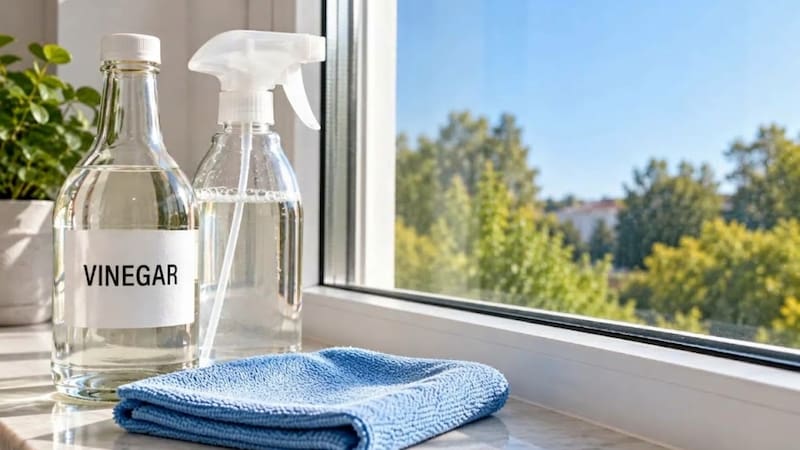
The University of Arkansas recommends a simple recipe that requires only two ingredients:
- 3 tablespoons of vinegar.
- 1 quart of water (approximately 946 milliliters).
To prepare the cleaner, both ingredients should be mixed in a spray container and applied as usual. As an additional tip, the institution mentions using newsprint to achieve a streak-free finish.
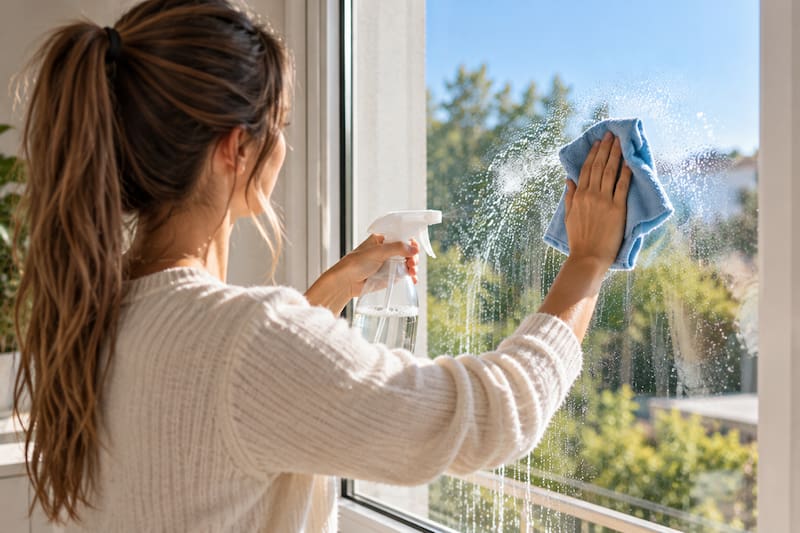
It also indicates that if a more concentrated solution is needed, a mixture with equal parts vinegar and water can be prepared.
What other mixtures does the University of Arkansas recommend for cleaning glass?
In addition to the basic preparation, the institution shares two other alternatives for cleaning windows.
- Vinegar, water, and cornstarch
- 1/4 cup of vinegar.
- 1 tablespoon of cornstarch.
- 1 quart of warm water (approximately 946 milliliters).
The ingredients should be mixed in a spray bottle.
- Vinegar, water, and liquid detergent
- 3 tablespoons of vinegar.
- 2 cups of water.
- Between 1/4 and 1/2 teaspoon of liquid detergent.
In this case, the university recommends placing the ingredients in a spray bottle and shaking the mixture. This preparation is especially suited for windows that are dirtier.
Finally, the University advises preparing the mixtures in well-ventilated places and not combining bleach with other chemical products.