
En esta noticia
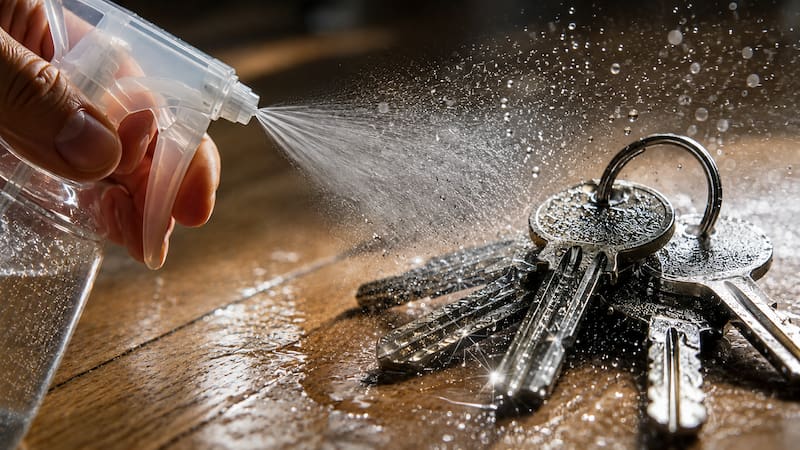
Keys are among the objects we touch most every day, and they are almost never cleaned. From being passed from hand to hand, from pockets to handbags and tables, they accumulate grease, dirt, and rust. Because of this situation, a simple and inexpensive home remedy gained popularity: spraying them with white vinegar.
What does vinegar do to keys?
The key is in its chemistry. White vinegar is a solution of acetic acid (CH₃COOH) in water, at a concentration of around 5%. That weak acid gives it a low pH (acidic), and it is precisely that acidity that does the job: it reacts with the oxide layer that forms on the metal and dissolves it, transforming it into a salt that comes off and can be wiped away with a cloth.
In other words, the acid “attacks” the rust and turns it into something that is no longer stuck to the key. That same acidity also helps to loosen grease and hardened residue in the grooves. With all that, vinegar works on three things that build up on keys:
- Grease and sweat: it breaks down the natural oils from the skin that stick to the surface and grooves.
- Embedded dirt: when sprayed, the liquid reaches the holes and crevices where grime gathers.
- Light rust: it helps loosen and dissolve the surface oxidation that appears on older keys.
Although there are specific products designed to eliminate germs, vinegar is an excellent cleaner, ideal for leaving keys free of grease, dirt and surface rust.
Part of its appeal is that it is a more economical, simple, and natural alternative than many commercial cleaners: it is a low-cost product that almost everyone has in the kitchen, and because it is not loaded with harsh chemicals, it is less aggressive and more suitable for everyday use.
How to apply it correctly, step by step
The procedure is simple:
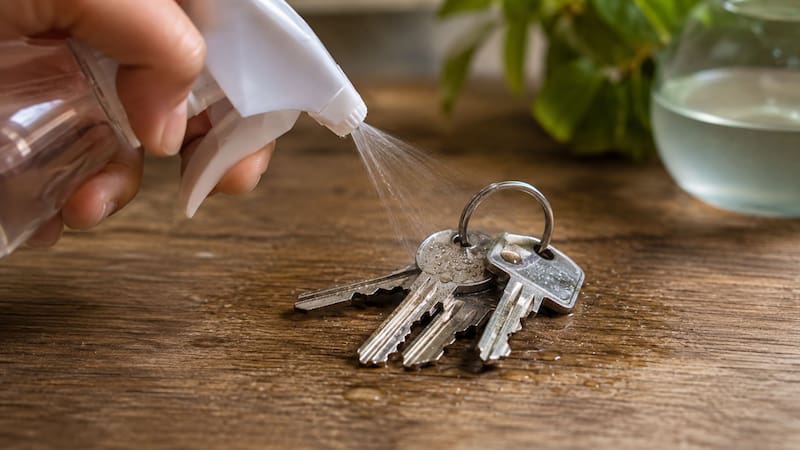
- Spray the keys with white vinegar, covering the surface and grooves well
- Let it sit for a few minutes so it loosens the grease and dirt
- Scrub with a brush with soft bristles
- Rinse with a little water if any vinegar remains
- Dry very well with a cloth or paper towel
Why is it worth doing
Beyond the aesthetic, keeping keys clean makes practical sense. They are objects in constant use that pass through many hands and surfaces, so they accumulate grime and bacteria like few other everyday items.
In addition, removing rust and dirt from the grooves helps the key go in and turn better in the lock and extends its useful life. That is why cleaning them from time to time with vinegar is a cheap and handy way to do it, is a good habit.