
En esta noticia
Kitchen and bathroom faucets can accumulate white stains that are difficult to remove with regular cleaning. These residues usually appear when water evaporates and leaves minerals stuck to the surface, which is why white vinegar is used as an alternative to make their removal easier.
This home trick has a chemical explanation, since vinegar contains acetic acid, a substance that can react with sodium carbonate, one of the compounds present in hard water deposits.
It is worth noting that its application requires certain precautions to clean surfaces without damaging them.

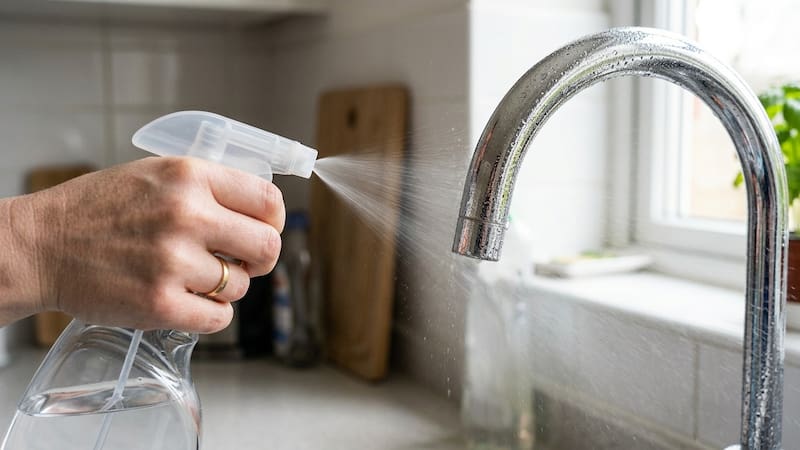
What sprinkling vinegar on household faucets is for
White vinegar can help remove hard water stains and mineral deposits that build up around the base, the spout, and other parts of faucets. In this regard, the faucet manufacturer Delta Faucet considers using a mixture of white vinegar and water to treat this type of mark and recommends rinsing the surface thoroughly after cleaning.
The explanation lies in the composition of vinegar, according to the American Chemical Society (ACS), acetic acid reacts with calcium carbonate and produces new substances, including calcium acetate, water, and carbon dioxide. This chemical reaction helps explain why vinegar can help dissolve certain mineral deposits.
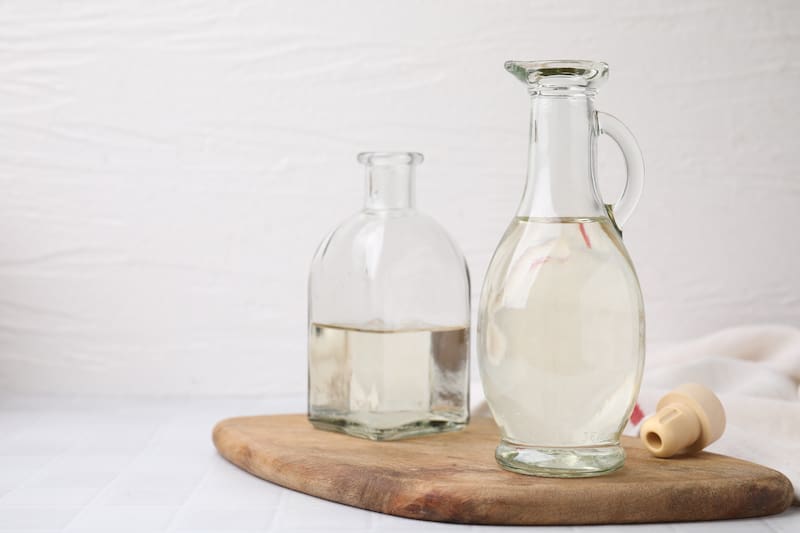
Among its main uses for cleaning faucets are:
- Reduce white stains: it helps remove certain mineral residues left after water evaporates.
- Loosen limescale deposits: its acidity makes it easier to dissolve deposits containing calcium carbonate.
- Make cleaning in hard-to-reach areas easier: when applied with a soft cloth, it allows the areas where residues accumulate around joints and the faucet base to be treated.

How to apply vinegar on faucets step by step?
To use this method, Delta Faucet recommends a solution made of equal parts white vinegar and water to remove certain hard water stains. The step-by-step process consists of:
- Prepare the mixture: combine equal parts white vinegar and water, whenever the manufacturer uses this solution.
- Apply to the surface: use the cloth to remove the residue, without resorting to abrasive sponges or items that could scratch the finish.
- Rinse with water: remove all traces of vinegar after cleaning.
- Dry the faucet: wipe with a clean, soft cloth to prevent water evaporation from leaving marks again.