
En esta noticia
Potassium soap mixed with water is one of the preparations recommended to fight the pests that can affect the lemon tree. This product acts by direct contact against certain insects and mites that damage leaves and shoots, so it can be an alternative for controlling some infestations in the garden.
To use it correctly, the product must be diluted following the manufacturer’s instructions and spray the affected areas without exposing the leaves to conditions that could damage them.
In addition, it is important to make sure the chosen soap is suitable for citrus trees and to observe the usage precautions to protect the health of the lemon tree.

What spraying potassium soap with water on the lemon tree is for
Spraying potassium soap diluted in water can help fight certain pests that affect lemon trees, such as aphids, whiteflies, and some mites. According to the University of Connecticut, insecticidal soaps are a useful tool for controlling insects and mites on ornamental plants, vegetables, and fruit trees, as long as they are used correctly.
These products are made from potassium salts and fatty acids that damage cell membranes in susceptible insects. Their action occurs through direct contact, so the solution must reach the pests for the treatment to be effective.
Among the organisms that can be controlled with insecticidal soaps are:
- Aphids: they feed on sap and can cause new leaves to curl. The University of California identifies these insects as one of the pests that affect citrus trees.
- Whiteflies: they are usually found on the underside of leaves and can weaken the plant.
- Mites, such as spider mites: some species can damage foliage and cause spots.
- Mealybugs and thrips: certain developmental stages are susceptible to these products.

How to prepare and apply potassium soap on the lemon tree to eliminate pests
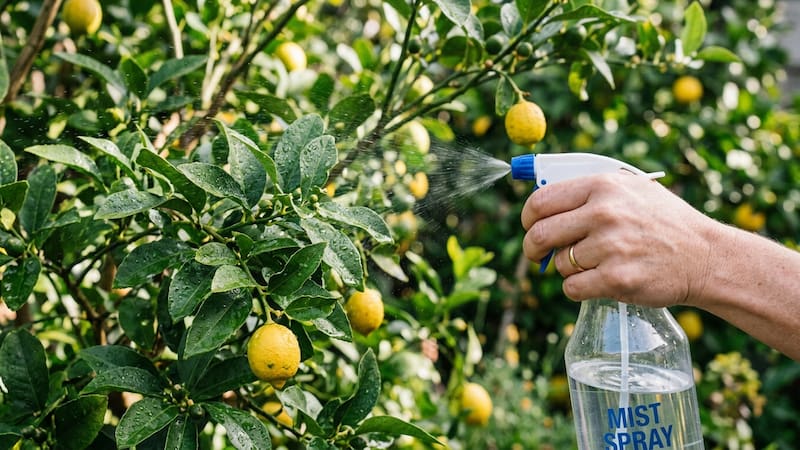
To use potassium soap on a lemon tree, the product should be diluted in water and sprayed on the affected area. The ratio depends on the soap’s formulation and concentration, so it is important to follow the manufacturer’s instructions.
These are the steps in the treatment:
- Prepare the mixture: choose an insecticidal soap formulated for plants and check that the label authorizes its use on citrus trees and against the identified pest. Measure the indicated amount and dilute it in water.
- Place the solution in a sprayer: use a clean container that allows the product to be distributed evenly.
- Spray both sides of the leaves: cover especially the underside, where some pests usually hide. The solution must come into direct contact with the insects to work.
- Choose the right time: apply early in the morning or at dusk, when the product should remain moist for longer. Avoid periods of intense heat and direct sun.
- Check the results: inspect the tree after treatment and repeat the application only if necessary and if the label allows it.
Likewise, the University of Connecticut warns that insufficient coverage reduces the effectiveness of insecticidal soaps, and additional applications may be necessary if the pests persist.