
En esta noticia
With daily use, the holes in the shower head can accumulate limescale and mineral residue. This blockage causes some jets to spray off course, others to stop working, and the water flow to seem weaker.
The problem is usually more common in homes with hard water, that is, with a high concentration of calcium and magnesium. To remove stubborn buildup without resorting to baking soda or vinegar, one alternative is to use a mild cleaner based on citric acid.

What product helps remove limescale from shower holes
Citric acid can help dissolve the mineral deposits that build up in the small channels of the shower head. Unlike baking soda, which is not especially effective at breaking down this type of buildup, it acts on limescale residues stuck to the surface.
Manufacturers such as Hansgrohe recommend using mild products that contain citric acid to remove limescale. They also advise against cleaners with hydrochloric acid, formic acid, chlorine, or acetic acid, found in vinegar, because they can damage certain finishes.
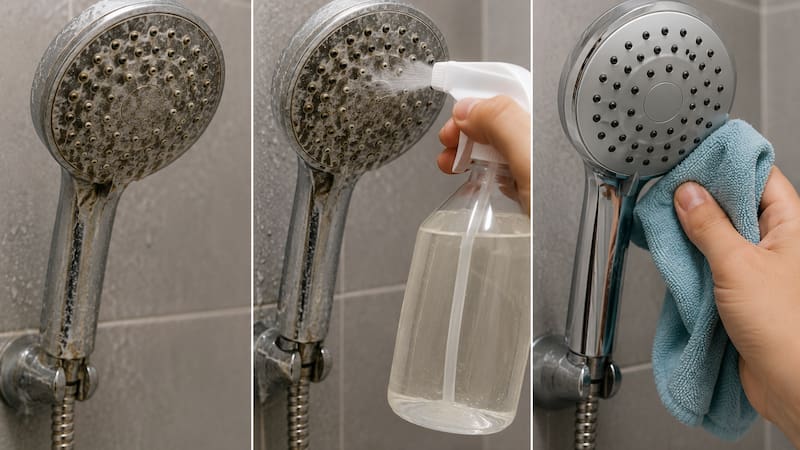
There is no universal ratio that applies to all showers. The concentration and contact time must be adjusted to the cleaner’s instructions and the manufacturer’s manual, especially when the shower head has chrome, black, or gold finishes, or delicate parts.
How to clean the shower head with citric acid
Before starting, it is advisable to put on gloves and check that the product is compatible with the material. If the shower head can be removed, cleaning is easier.
The recommended steps are:
- Turn off the water and carefully remove the shower head, without forcing the threads or connections.
- Prepare a solution of warm water and mild cleaner based on citric acid in a container, following the dosage indicated on the package.
- Submerge only the affected part for a few minutes. The exposure time indicated by the manufacturer should not be exceeded; some brands set a maximum of ten minutes.
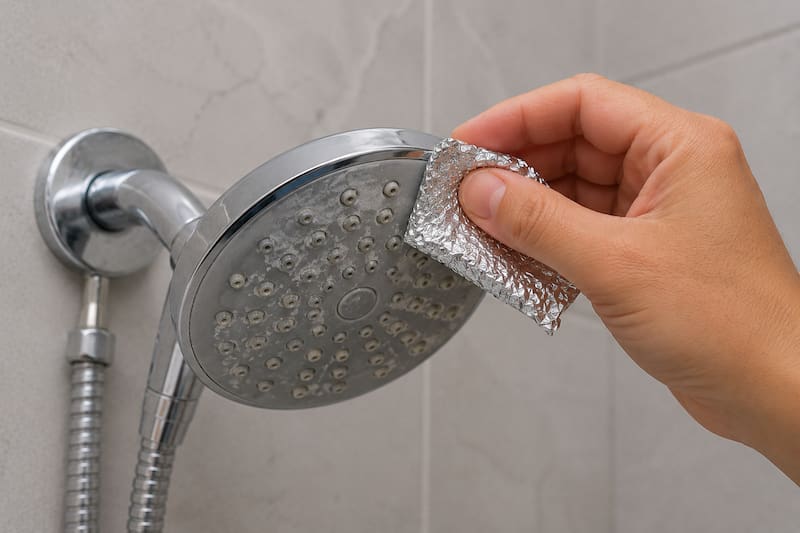
- Remove the softened deposits with a soft cloth or a non-abrasive sponge. If the holes are made of flexible silicone, the limescale may come off by gently rubbing them with your fingers.
- Rinse the shower head inside and out with plenty of clean water, put it back in place, and let the water run to remove any remaining product.
If the shower cannot be removed, the cleaner can be applied with a soft cloth over the affected area. It is not advisable to spray it directly, because the liquid could get into internal parts and damage the shower head components.
How to prevent limescale from blocking the shower again
Cleaning frequency depends mainly on water hardness. The higher the mineral concentration, the faster the buildup will form again.
To reduce buildup, it is recommended to:
- Dry the shower head and faucets after using them when possible.
- Periodically rub the flexible holes to dislodge recent deposits.
- Clean it before the channels become completely blocked.
- Check the filter located at the shower head connection if the model includes one.
- Consider an anti-limescale system or water softener when the home’s water is especially hard.
Citric acid must be used separately: it must never be mixed with bleach, chlorine, or other cleaners. After treatment, it is essential to rinse the shower thoroughly and follow the manufacturer’s specific care instructions.