
En esta noticia
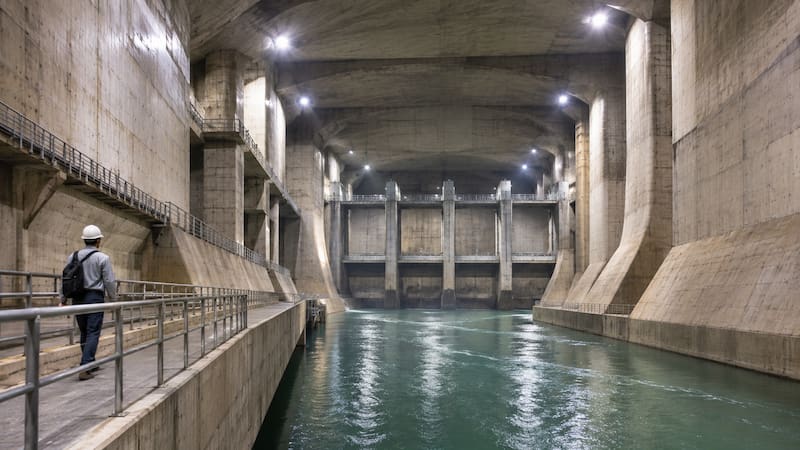
Japan has one of the world’s most impressive hydraulic engineering projects: a giant underground structure built to reduce flood risk in communities near Tokyo. The system has tunnels stretching more than 6 kilometers, five intake shafts and a massive underground tank supported by dozens of concrete columns.
The structure is in Kasukabe, in Saitama prefecture, and is part of a system designed to control excess water from the region’s rivers.
Its infrastructure can collect large volumes of water during heavy rainfall and divert them to another channel to reduce the risk of overflow in urban areas.

What the giant underground structure Japan built to protect cities near Tokyo looks like
The project is known as the Metropolitan Area Underground Discharge Channel and is located in Kasukabe, in Saitama prefecture. It is a flood-control system that mainly protects the Nakagawa and Ayase river basins and communities in that metro area. It has a tunnel 6 kilometers long, built about 50 meters underground, connecting different water intake points to the Edogawa River.
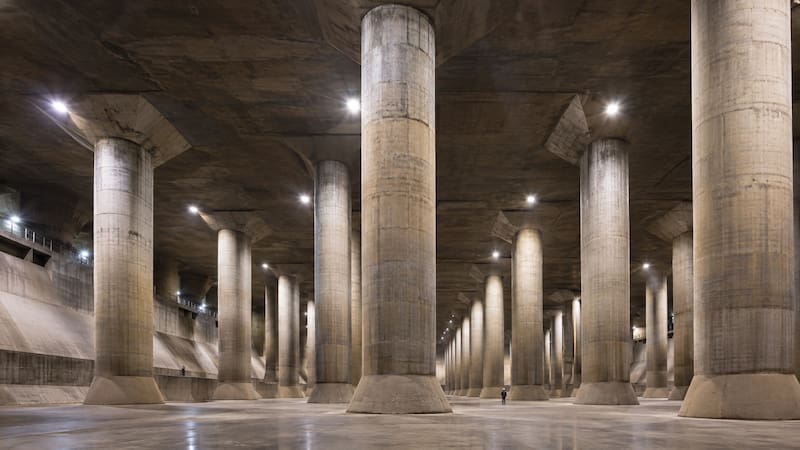
One of the most striking sections is the pressure-regulating tank, a huge underground chamber 177 meters long, 78 meters wide and 18 meters high. Inside, it is supported by 59 concrete columns, each weighing 500 tons, creating a scene reminiscent of a temple.
How the system works to divert water and prevent flooding
The system is designed to kick in when heavy rains raise river levels in the region. Instead of allowing excess water to spread through urban areas, the system collects it through five massive vertical shafts connected to the underground tunnel. From there, the flow moves to the pressure-regulating tank, which reduces the force of the water and allows it to be directed in a controlled way to the Edogawa River.
The final stretch has four high-capacity pumps that push the water into that river. According to official information from Japan’s Ministry of Land, Infrastructure, Transport and Tourism, the system can handle a maximum discharge capacity of 200 cubic meters per second. To put that figure in perspective, the agency says it can move a volume equivalent to an Olympic-size 50-meter pool in about one second.

Why the underground tank has 59 columns weighing 500 tons each
The huge concrete columns were not placed only to support the structure’s roof; they also serve a structural safety function. The tank was built in an area with a high groundwater level, and there is a risk that the pressure of the surrounding water could push the structure upward. The weight of the columns helps counteract that force and keeps the tank from rising or losing stability.
The tank also serves a hydraulic function because it slows the water coming in from the tunnels and allows the pumps to operate steadily. It also helps regulate pressure changes before the flow is discharged into the river.