

En esta noticia
A mix of common household ingredients can help remove built-up grime from the toilet bowl. Scientific research supports vinegar’s ability to dissolve limescale deposits.
Yellow stains, limescale buildup, and dark marks that appear inside the toilet bowl are among the most common bathroom cleaning problems. However, there is a home method that uses white vinegar, baking soda, and a toilet brush to help remove certain residue without always having to rely on specialty products.
The effectiveness of one of these ingredients is backed by science. A 2021 study, titled A Standardized Test Protocol for Evaluation of Scale Reduction Technologies, examined the ability of the acetic acid in vinegar to dissolve calcium carbonate deposits, one of the main components of limescale. The results showed it was useful against this type of buildup.
How do you clean a toilet with baking soda and vinegar in 15 minutes?
The home method starts with pouring warm water into the bowl, without using boiling water. Then, baking soda is sprinkled over the walls and the areas with visible dirt. Next, white vinegar is added, creating a fizzy reaction when it comes into contact with the baking soda.
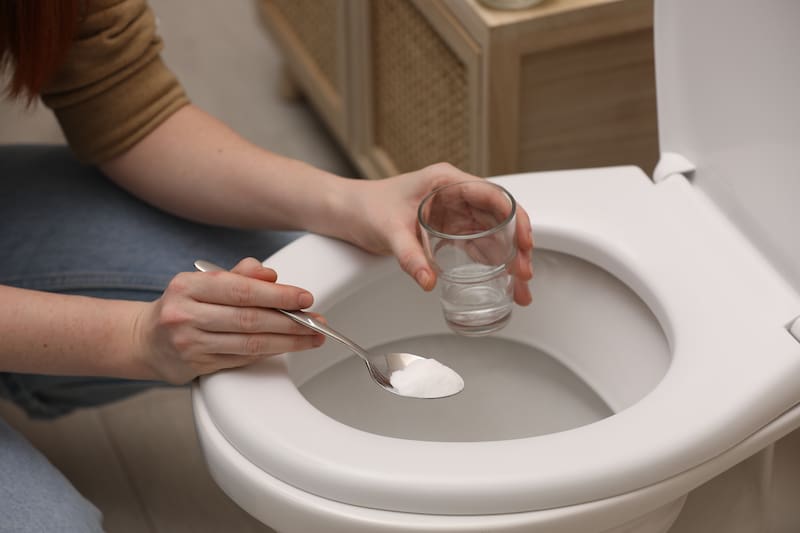
To use this method, you can follow five steps:
- Pour a little warm water into the toilet bowl.
- Sprinkle baking soda over the stains and the sides of the bowl.
- Slowly add white vinegar to the affected areas.
- Let the mixture sit for about 15 minutes.
- Scrub with a toilet brush and flush to remove the residue.
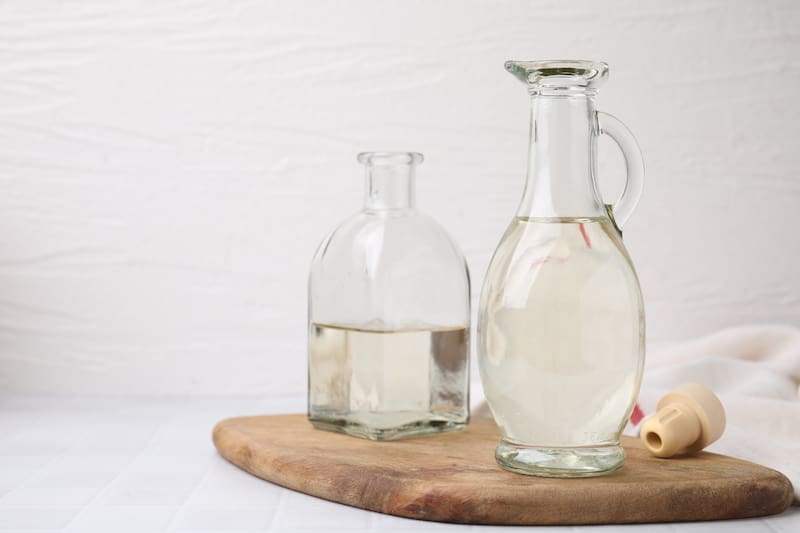
In particular, research published in PubMed Central showed that cleaning vinegar with a 6% acetic acid concentration was able to dissolve calcium carbonate deposits under laboratory conditions. In one test, less than 1% of the original deposit remained after two hours of exposure.
What does science say about removing limescale and toilet stains?
The scientific explanation lies in the composition of mineral deposits. Limescale is made mainly of calcium carbonate, a substance that can react with acids.
The acetic acid in vinegar helps dissolve it, so it can be useful for treating certain buildup that appears on water-exposed surfaces.
However, dark or yellowish stains do not always have the same cause. Some may be linked to mineral deposits, while others are due to organic dirt, built-up residue, or surface damage. That is why vinegar does not produce the same results against all of them.
In addition, the U.S. Centers for Disease Control and Prevention (CDC) highlight the importance of mechanical cleaning to remove dirt and impurities from surfaces. In the case of the toilet, the brush allows friction on the affected areas and removes some of the stuck-on residue. However, cleaning does not necessarily mean disinfecting, since that process requires specific products and conditions.