
En esta noticia
When summer temperatures rise, the air conditioner often becomes one of the most frequently used appliances in the home. But while homeowners focus on the thermostat and electricity bill, one small component can have a major impact on how well the system performs: the air filter.
A filter covered in dust and debris can restrict airflow, forcing the system to work harder to circulate cooled air. Over time, that can affect cooling performance, increase energy consumption and put additional strain on the equipment.
That is why regular air conditioner filter cleaning becomes particularly important during periods of heavy summer use.

The filter is one of the first things to check
The primary job of an AC filter is to capture particles such as dust and other airborne debris before they circulate through the system.
As the filter collects more material, air has less room to pass through. A heavily clogged filter can therefore interfere with airflow and make it harder for the air conditioner to maintain the desired indoor temperature.
This does not mean every dirty filter will immediately cause the same loss of efficiency. The effect depends on the type of equipment, the filter itself, how often the system operates and the conditions inside the home.
Still, manufacturers consistently recommend inspecting and maintaining filters as part of routine AC maintenance.
Why summer requires more attention
The warmer months create a particular challenge because many households operate their air conditioners for long periods.
More operating hours mean more air passes through the filter, allowing dust and particles to accumulate faster. Homes with pets, smokers or higher levels of indoor dust may also require more frequent attention.
Carrier notes that filter replacement schedules can vary significantly depending on factors such as the filter’s thickness, household conditions and how frequently the system is used.
In other words, there is no single schedule that works for every household.
Should you clean the filter every 15 or 30 days?
For some systems, that can be a reasonable summer routine.
Samsung currently recommends cleaning an AC filter every 15 days to help maintain efficient cooling performance. Mitsubishi Electric also recommends cleaning certain filters more frequently during periods of heavy use, while other filter types have longer maintenance intervals.
For central HVAC systems, the schedule can be considerably different. Carrier says homeowners should generally inspect filters at least every two to three months, although heavy use and household conditions can require more frequent replacement.
This difference is important because an air conditioner’s maintenance requirements depend on the specific equipment.
Rather than following a fixed number blindly, homeowners should check the manufacturer’s instructions and inspect the filter regularly during periods of intensive use.

What happens when an AC filter becomes clogged?
A neglected filter can create several problem:
Cooling can become less effective
Restricted airflow can make it more difficult for the system to move cooled air through the room. The air conditioner may therefore need to operate for longer periods to achieve the desired temperature.
Energy consumption can increase
When an HVAC system has to work harder because airflow is restricted, energy use can rise. Regular filter maintenance is therefore one of the relatively simple measures homeowners can take to help maintain system efficiency.
The equipment can experience additional strain
Poor airflow can place additional demands on components of the cooling system. Maintaining the filter is consequently not only about keeping the room comfortable but also about supporting the equipment’s long-term operation.
Indoor air quality can suffer
The filter is also part of the system’s strategy for managing airborne particles. If it becomes excessively dirty, its ability to support clean airflow can be affected.
For households with pets, allergies or significant amounts of dust, checking the filter more frequently can be particularly important.
How to clean an air conditioner filter
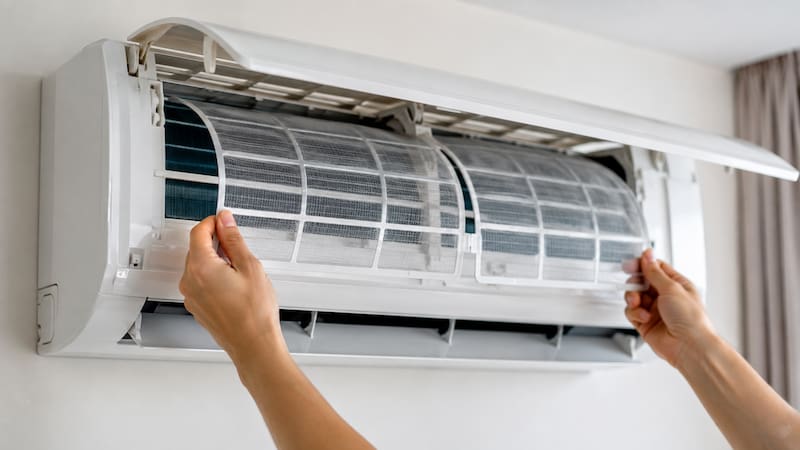
For a typical removable filter, the process is relatively simple, although homeowners should always follow the instructions provided for their particular unit.
First, turn off the air conditioner before removing the filter. Carefully take the filter out and remove accumulated dust according to the manufacturer’s instructions.
If the filter is washable, it can generally be rinsed and then allowed to dry completely before being returned to the unit. A filter that is designed to be replaced should not be washed and reused.
The filter should be completely dry before being installed again.
Don’t forget the rest of the air conditioner
Cleaning the filter is important, but it is not the only maintenance task.
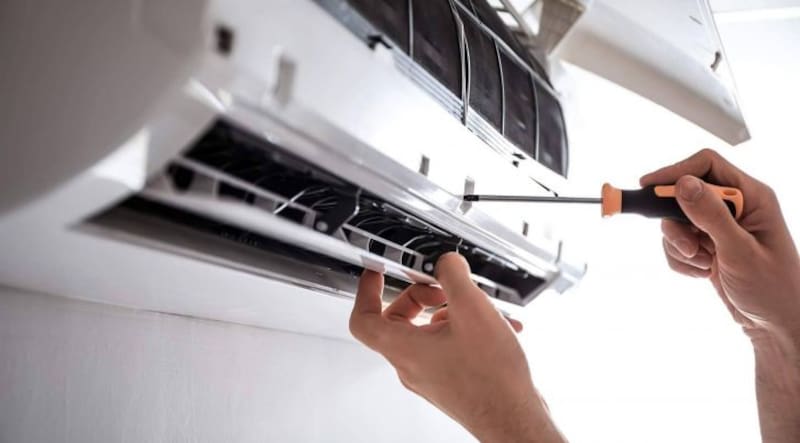
The outdoor portion of the system can also accumulate leaves, dirt and other debris that restrict airflow. Keeping the area around the outdoor unit clear can help the system operate more efficiently.
It is also worth paying attention to unusual smells, weak airflow, water leaks, unusual noises or an air conditioner that struggles to cool the room. These signs may indicate that the problem goes beyond a dirty filter and requires professional attention.