
En esta noticia
Thawing a chicken may seem simple, but how you do it can directly affect food safety. Although many people leave it on the kitchen counter to speed up the process, that practice is not recommended and can encourage bacteria to grow.
The U.S. Department of Agriculture (USDA) warns that perishable foods should not be thawed at room temperature.
Instead, it recommends using methods that allow you to keep the chicken at a safe temperature throughout the process.

How to Thaw Chicken Safely, According to USDA Guidance
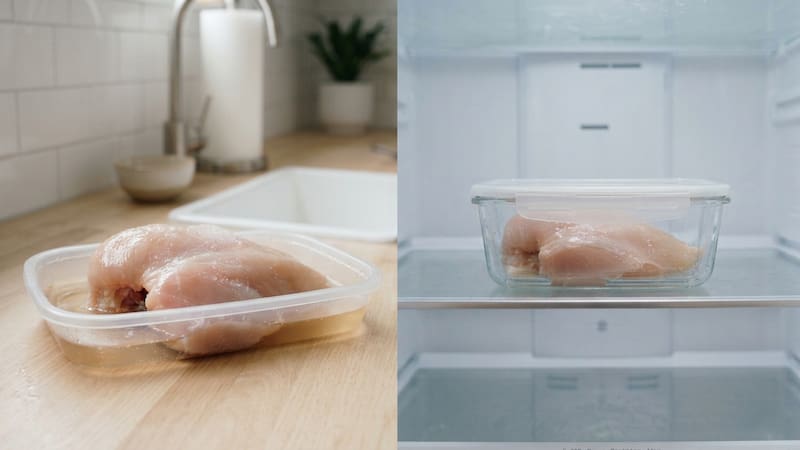
The U.S. Department of Agriculture (USDA) recognizes three safe ways to thaw chicken: in the refrigerator, in cold water or in the microwave. The first option is the most convenient when you can plan ahead, because it keeps the meat refrigerated throughout the process. To do this, it recommends placing it in a container that catches any juices and storing it on a lower shelf away from other foods.
Another option is cold water, with the chicken sealed in a leakproof bag and fully submerged; the water should be changed every 30 minutes to keep it cold. You can also use the microwave’s defrost setting, although the USDA warns that in both cases the meat must be cooked immediately after thawing.
In this regard, the CDC and USDA recommend cooking poultry to an internal temperature of 165 F (74 C), which should be checked with a food thermometer. This helps reduce the risk of eating chicken that still contains harmful bacteria.
Why USDA Discourages Thawing Chicken at Room Temperature
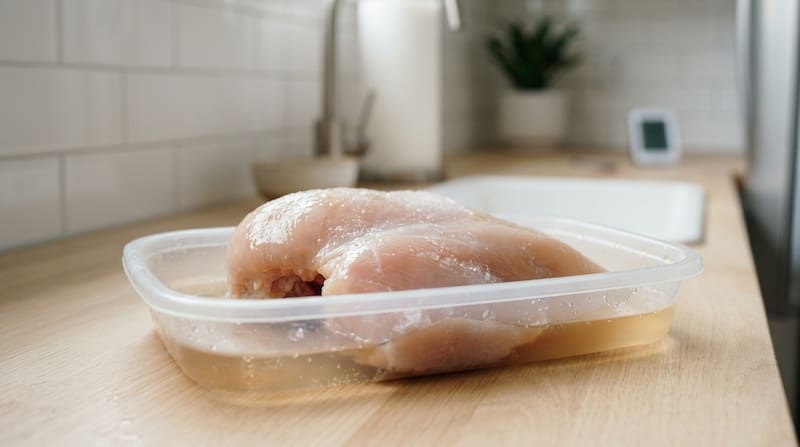
Thawing a chicken on the kitchen counter is another option people use, but it can encourage bacteria to multiply and increase the risk of foodborne illness. For that reason, the USDA warns against leaving meat at room temperature during thawing.
The agency explains that there is a food-safety danger zone between 40 F and 140 F (4.4 C and 60 C), because within that range, bacteria can multiply quickly. The problem arises when chicken is left out of the refrigerator because its surface can reach those temperatures while the center is still frozen.
The FDA agrees with that warning and says thawing perishable foods at room temperature can encourage the growth of microorganisms and even allow toxins to form that could survive cooking.