
En esta noticia
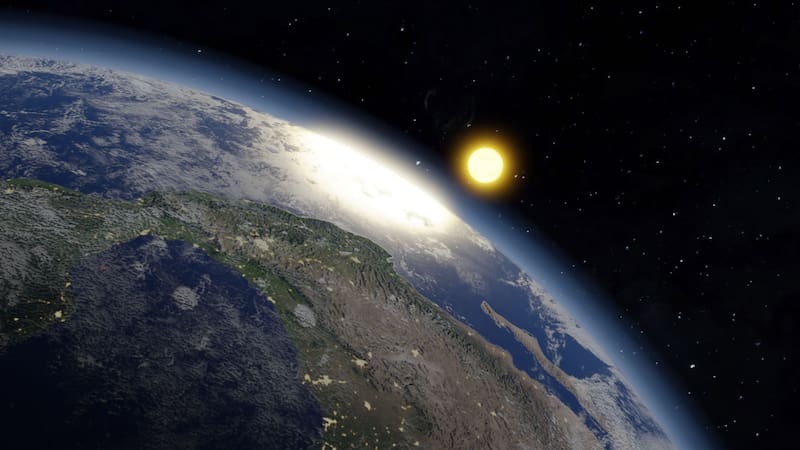
The Earth will reach on July 6, 2026 the point farthest from the Sun in its entire annual orbit, a phenomenon known as aphelion. That day, the planet will be more than 94.4 million miles away, when the northern hemisphere is in the middle of summer.
NASA confirmed that aphelion will occur around 17:30 UTC, around noon in the central United States. Six months later, in January, the Earth will reach the opposite point, perihelion, at about 147 million kilometers from the Sun.
What is aphelion and how far does the Earth move away from the Sun?
Aphelion is the time of year when the Earth is positioned farthest from the Sun in its elliptical orbit. The word comes from Greek apo (away) and helios (Sun) and describes that extreme point in the annual path.
Between aphelion and perihelion, there is a difference of only 3 million miles. It is an impressive figure, but it represents only 3% of the 93 million miles that, on average, separate the Earth from the Sun.
Aphelion and perihelion, in numbers:
- Aphelion 2026: July 6, at 152.1 million km from the Sun
- Perihelion 2026: early January, at about 147 million km from the Sun
- Average Earth-Sun distance: 150 million km (one astronomical unit)

Why is it hot in the northern hemisphere if the Earth is farther from the Sun?
The cause is not the distance from the Sun, but the tilt of the Earth’s axis. NASA explains that this 23.5-degree angle is what produces the seasons: when the northern hemisphere tilts toward the Sun, it receives more direct sunlight, and that is what translates into summer, regardless of how close or far the planet is.
That same elliptical orbit brings an additional effect: the Earth moves more slowly the farther it is from the Sun. That is why the northern summer, which coincides with aphelion, ends up being the longest season of the year in the northern hemisphere.