
En esta noticia
For the first time, a vaccine designed entirely by artificial intelligence has passed a clinical trial in humans. Researchers at the University of Cambridge confirmed that the compound is safe, well tolerated, and generates immune responses against multiple coronaviruses —including SARS-CoV-2— and against animal viruses that have not yet infected people.
The study was published in the Journal of Infection and developed together with DIOSynVax, a university spin-off. The vaccine was tested on 39 healthy volunteers between the ages of 18 and 50 at facilities of the UK National Institute for Health Research.

How does the AI-designed universal coronavirus vaccine work?
Artificial intelligence analyzed genetic information from dozens of coronaviruses in the Sarbeco family and identified features common to all of them. Using that data, it digitally built a single active component —called a “superantigen”— capable of training the immune system against multiple variants at once.
Unlike conventional vaccines, which target a specific strain and must be reformulated frequently, this superantigen was designed to anticipate future mutations.
Administration method
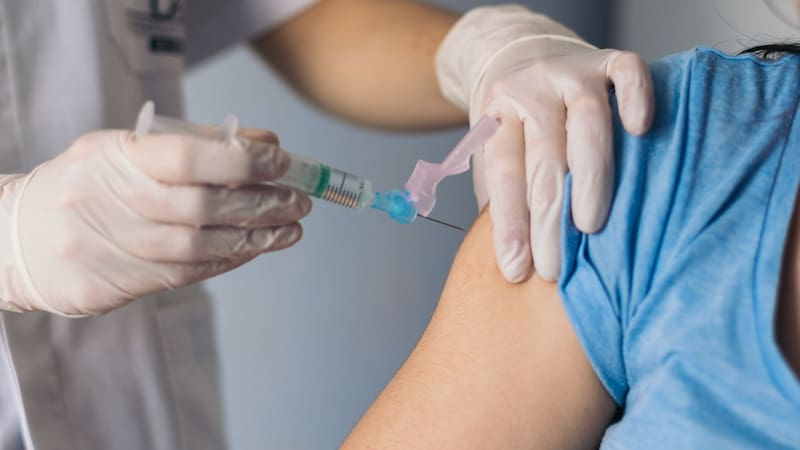
- It was administered as a DNA vaccine using a needle-free microjet system
- The superantigen is compatible with multiple delivery platforms
- The absence of a needle could make mass vaccination campaigns easier
What does this trial mean and when could it become available?
The first trial confirmed safety, but the universal coronavirus vaccine requires additional stages before reaching the public. A Phase 2 study is planned to evaluate immune responses in a larger and more diverse group of participants.
Professor Saul Faust, the trial’s principal investigator, said that if this kind of vaccine can be developed before an outbreak, “millions of lives could be saved, lockdowns could be avoided, and the economy preserved”. The same AI design platform could be applied in the future to other virus families, such as Ebola and influenza.

Next steps
- Phase 2: trial in a larger number of participants to confirm efficacy
- Expansion: the platform could be adapted to influenza and hemorrhagic viruses
- Funding: the project was funded mainly by Innovate UK