
En esta noticia
The Internal Revenue Service (IRS) sets financial penalties for taxpayers who underreport the taxes they owe or fail to meet certain tax obligations.
According to the Internal Revenue Code (IRC), these penalties can vary depending on the type and severity of the violation and whether the taxpayer properly reported certain transactions.

Who could face penalties for underreporting taxes?
Under IRS section 6662, taxpayers who report less tax than they actually owe could face financial penalties from the IRS.
The rules cover several situations that can trigger penalties:
- Failing to report all taxable income.
- Claiming deductions or tax credits for which the taxpayer does not qualify.
- Acting negligently or failing to comply with tax rules.
- Substantially underreporting income tax.
- Incorrectly reporting the value of certain property or assets.
For individuals, a substantial understatement generally exists when the difference exceeds 10% of the tax that should have been reported or $5,000, whichever is greater. The penalty is not applied automatically.

Who could face penalties for omitting certain transactions from a tax return?
According to IRC section 6662A, those who incorrectly report certain tax transactions and as a result reduce the taxes they owe could face additional penalties.
The provision covers two types of transactions:
- Transactions on the IRS list: transactions the agency identifies as tax-avoidance arrangements or substantially similar to them.
- Other reportable transactions: transactions whose significant purpose is to avoid or evade federal income tax.
In these cases, failing to report the transactions as required by law can increase the penalty rate.
How is the penalty rate determined?
The Internal Revenue Code sets different penalty rates depending on the type of violation and the circumstances of each case:
- 20%:
- Regla general para determinadas subestimaciones de impuestos, negligencia y otras infracciones del artículo 6662.
- Subestimaciones relacionadas con las transacciones comprendidas en el artículo 6662A, cuando se cumplen con los requisitos de divulgación.
- 30%: understatements tied to Section 6662A transactions that were not properly disclosed.
- 40%: certain aggravated violations, such as grossly incorrect valuations or certain undisclosed transactions lacking economic substance.
The percentages are calculated on the portion of tax not paid or on the tax understatement determined under the applicable provision. The 20% and 30% penalties under Section 6662A do not stack on the same understatement. The 30% rate replaces the 20% rate when the conditions set by law are met.
What should you do if you made an unintentional mistake on your tax return?
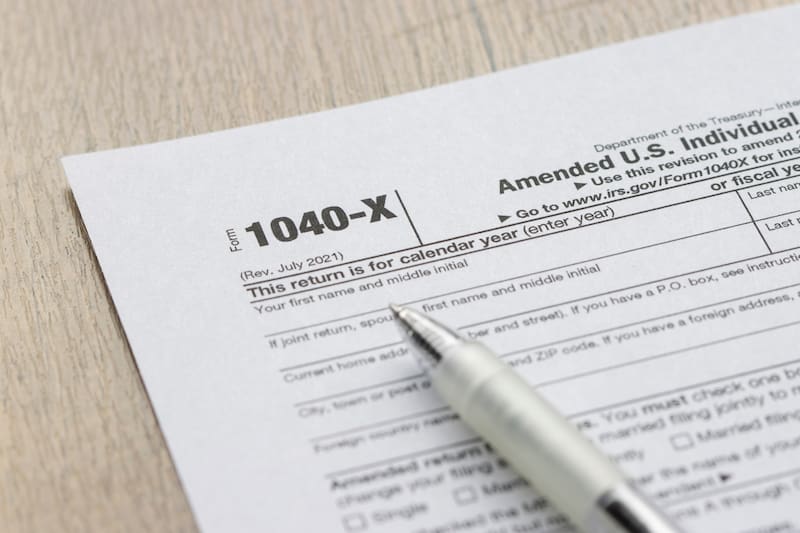
The IRS allows taxpayers to correct certain errors on their tax returns through Form 1040-X, which is used to amend previously filed individual returns.
- Review the original return and identify the incorrect information.
- Determine whether an amended return should be filed.
- Complete Form 1040-X and include the necessary documents.
- Pay any additional tax owed, if applicable, to avoid more interest and possible penalties.
- Request a reduction or removal of the penalty if there are grounds that justify the failure to comply.
The IRS allows exceptions for certain taxpayers who can show they acted with reasonable cause and in good faith.