En esta noticia
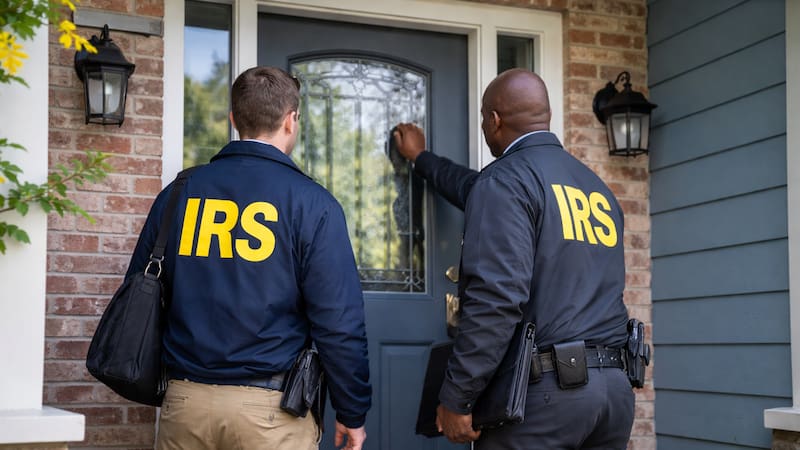
The possibility that agents from the Internal Revenue Service (IRS) show up at the doorstep of a residence has raised concern among numerous taxpayers in the United States.
However, the federal agency itself has stated in its official communication that such situations are exceptional and are related to serious cases, such as money laundering or complex tax fraud.

Under what circumstances can IRS visits take place
According to the agency’s official guidance, in-person visits are uncommon, and in most cases, initial contact is made in writing.
The IRS clarifies that:
- First, letters or official notices are sent
- Later there may be calls to arrange
- Then a visit could take place

Likewise, the agency emphasizes that visits are not usually unexpected in most cases and are generally associated with:
- Tax audits
- Collection of tax debts
- Specific investigations
What is the basis that triggers more rigorous inquiries
When it comes to crimes such as money laundering, the situation changes completely.
The agency’s special division, known as Criminal Investigation (CI), is responsible for investigating deliberate tax evasion, financial fraud, money laundering operations, and crimes associated with organized crime.
In these cases, agents have the authority to: gather financial evidence, execute court orders, and participate in operations alongside other federal agencies.
This type of investigation aims to detect undeclared income or suspicious transactions within the financial system.

Is it possible for agents to show up at your home without notice?
The short answer is: it is highly unusual. The IRS itself has clarified that unexpected visits are rare and exceptional, and they are generally associated with serious criminal investigations; they do not apply to common errors or delays in paying taxes.
In fact, the agency has reduced this type of practice in order to prevent fraud and strengthen the safety of both taxpayers and its employees.
How to determine whether it is actually the IRS
One of the most relevant aspects emphasized by the agency is the need to avoid becoming a victim of scams.
The IRS warns that it never initiates contact through social media or direct messages, demands payment via gift cards, or threatens immediate arrest.
The official form of contact always begins with a verifiable written notice.