
En esta noticia
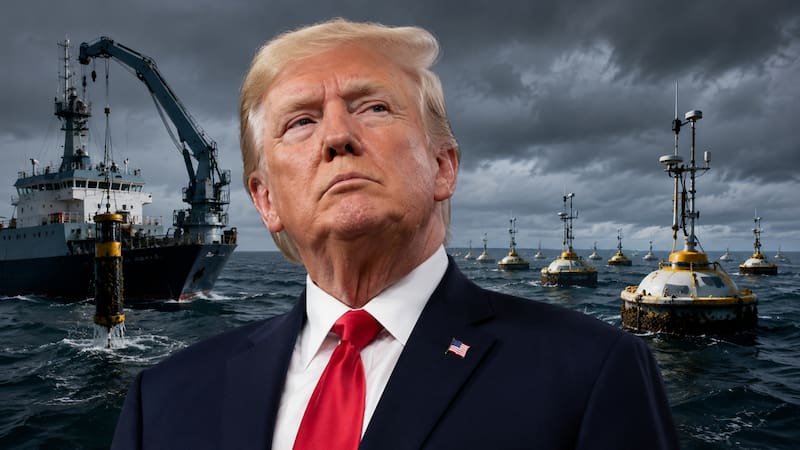
The Trump administration ordered the removal of more than 900 measuring instruments installed in the depths of the Atlantic and Pacific, ending the most comprehensive ocean monitoring program in the United States. The National Science Foundation (NSF) confirmed the start of the decommissioning process for the Ocean Observatories Initiative (OOI).
For more than ten years, that network collected continuous data on temperature, chemistry, geology, and marine biology. It was designed to operate for 25 years. After the cut, only the seafloor sensor system installed off the coast of Oregon will remain active.

What does the decommissioning of the 900 ocean sensors mean?
The NSF described the measure as a transition toward a “more agile approach”, aimed at emerging technologies. However, the removed instruments monitored variables that cannot be replicated with one-off expeditions: ocean circulation, water acidity, and changes in marine ecosystems over time.
Among the most critical data that will no longer be collected are those linked to the Atlantic Meridional Overturning Circulation (AMOC), a current that regulates the climate of the Northern Hemisphere. Several studies warn that it could be weakening and that its eventual collapse would have severe climate consequences for Europe and North America.

What the OOI continuously measured:
- Water temperature, salinity, and chemistry at multiple depths
- The state of ocean circulation, including the AMOC
- Ecosystem conditions in high fishery productivity areas
- Undersea geological activity on Pacific tectonic plates

What consequences does this have for climate and global fishing?
The coastal area monitored by the system off Oregon and Washington accounts for nearly 25% of the world’s annual fish catch. Without continuous data, scientists and industries will lose the ability to anticipate changes in the reproductive and migratory cycles of commercial species.
On the climate front, disconnecting the AMOC sensors eliminates a key early-warning source for a possible collapse of that current. Experts warned that, without sustained observation, ocean risks become invisible until it is too late. The NSF budget for 2026 had already proposed cutting OOI funding by 80%.