
En esta noticia
The United States Navy faces a multi-decade challenge to rebuild its four public shipyards, facilities essential for the maintenance of aircraft carriers and nuclear submarines. The Shipyard Infrastructure Optimization (SIOP) program could extend for more than 50 years and exceed $200 billion, according to a report published on September 25, 2026 by the Government Accountability Office (GAO).
The agency warned that costs and timelines increased compared with initial forecasts and that weaknesses in forecasting mechanisms still remain.
Why the United States is rebuilding its four naval shipyards
The SIOP program began in 2018 to address the deterioration of the facilities and the capacity limitations affecting maintenance of the U.S. fleet.
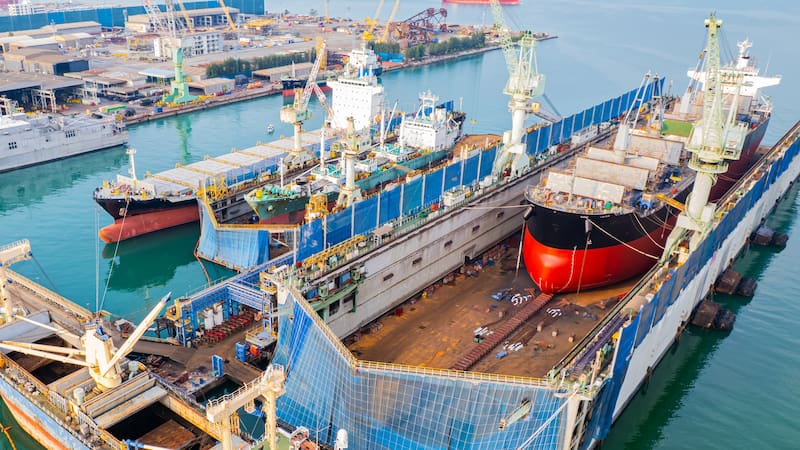
The four public shipyards fulfill a strategic role: they make it possible to repair, maintain and modernize nuclear-powered vessels, including aircraft carriers and attack submarines. Infrastructure deficiencies can make these jobs difficult and affect the availability of the vessels for military operations.
What the four naval shipyards are
The four public shipyards of the Armed Forces are:
- Norfolk Naval Shipyard (NNSY)
- Portsmouth Naval Shipyard (PNSY)
- Puget Sound Naval Shipyard and Intermediate Maintenance Facility (PSNS&IMF)
- Pearl Harbor Naval Shipyard and Intermediate Maintenance Facility (PHNSY&IMF)

What work the Navy needs to modernize its shipyards
The United States Navy needs to modernize dry docks, refurbish industrial equipment and upgrade facilities and computer systems at its four public shipyards. The SIOP seeks to adapt these facilities to the maintenance needs of nuclear-powered aircraft carriers and submarines.
According to the Naval Sea Systems Command (NAVSEA), many of these shipyards were designed between the 19th and 20th centuries, when vessels used conventional propulsion systems. For that reason, they require investment to meet the technical demands of the current fleet.
How much the reconstruction will cost
The projected investment exceeds $200 billion and the program could last more than half a century. The figure reflects the scale of an initiative that is not limited to repairing buildings: it also includes adapting the infrastructure needed to sustain fleet maintenance over the coming decades.
The GAO explained that the initiative has become the largest construction and restoration effort in the Navy to date. However, planning took longer than expected and cost estimates grew due to various obstacles, including environmental issues and the seismic risks identified at Puget Sound Naval Shipyard.