En esta noticia
Vinegar is a common product in virtually every kitchen, but its uses go beyond the strictly culinary. This ingredient can also be incorporated as part of household cleaning routines.
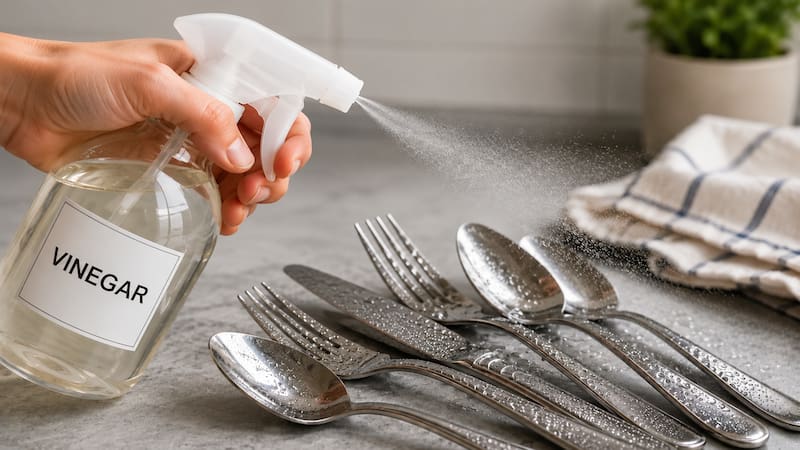
One of its many uses is spraying it to restore the shine of cutlery. Applying vinegar on forks, knives, and spoons can be effective for removing water spots and mineral residue that build up with everyday use, preserving the shine of the utensils.
Sprinkling vinegar on kitchen utensils: what it is for and why it is recommended
White vinegar contains acetic acid, an element highly effective at removing mineral deposits and dirt, thus avoiding the use of harsher chemical products.
Among the advantages of this technique, the following stand out:
- It helps remove water spots
- It helps remove adhered mineral residue
- It restores the shine of stainless steel
- It helps neutralize any lingering bad odor
- It removes fingerprints and surface marks
- It is ideal for stainless steel cutlery, since this material tends to accumulate water spots.
Step by step: how to apply the vinegar method on forks, knives, and spoons
Applying it is simple and only requires a few steps:
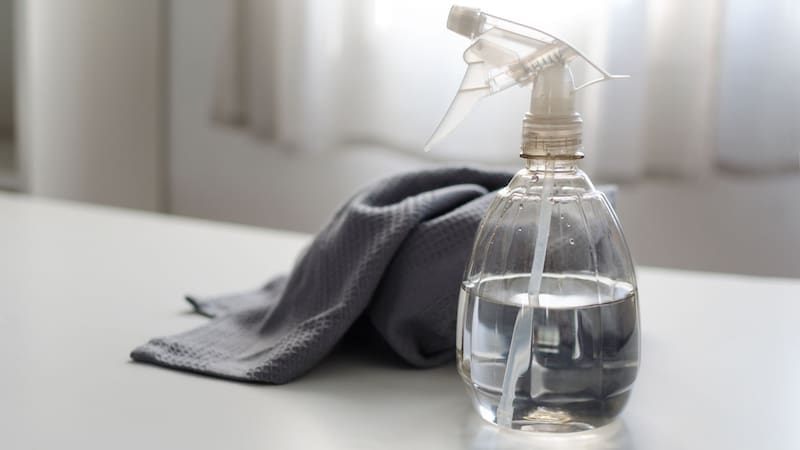
- Prepare the solution: mix equal parts white vinegar and warm water in a container. For tougher stains, undiluted vinegar can be used.
- Submerge the cutlery: place the forks, knives, and spoons in the mixture and let them soak for 5 to 10 minutes. It is not advisable to leave them too long, especially cutlery with glued handles, so as not to affect the adhesive.
- Gently rub: with a soft cloth or a non-abrasive sponge, go over each piece following the direction of the steel “grain” (the polishing lines), so as not to leave scratches.
- Rinse well: run the cutlery under clean water to remove all the vinegar and prevent any odor or taste from remaining.
- Dry immediately: this step is key. Dry each piece right away with a dry cloth, because letting them air dry is what creates the water spots that are meant to be removed.
A couple of precautions: do not leave the cutlery soaking for hours or use undiluted vinegar for prolonged periods, as excessive acidity can dull the finish over time.
Also avoid mixing vinegar with bleach (chlorine), because it produces toxic gases. And never use metal sponges or abrasive products: they permanently scratch stainless steel.