En esta noticia
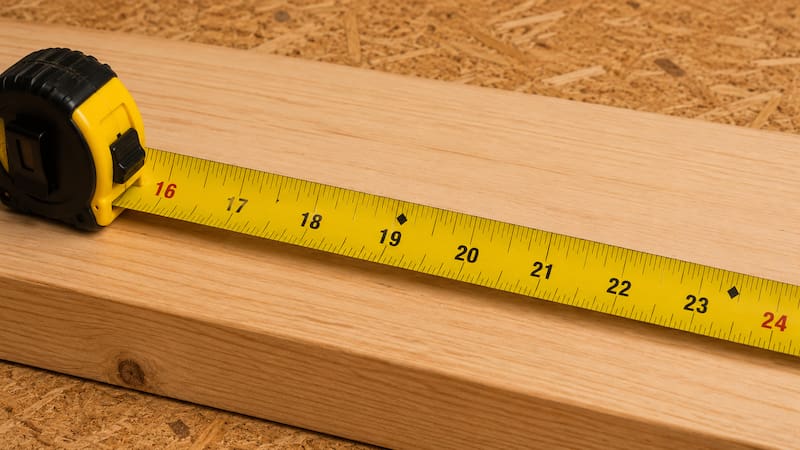
Tape measures have a small black diamond near the 19-inch mark that most users never notice and often mistake for a defect in the tool.
That symbol is a precision reference built into the tool to solve a mathematical problem that comes up on every construction site.
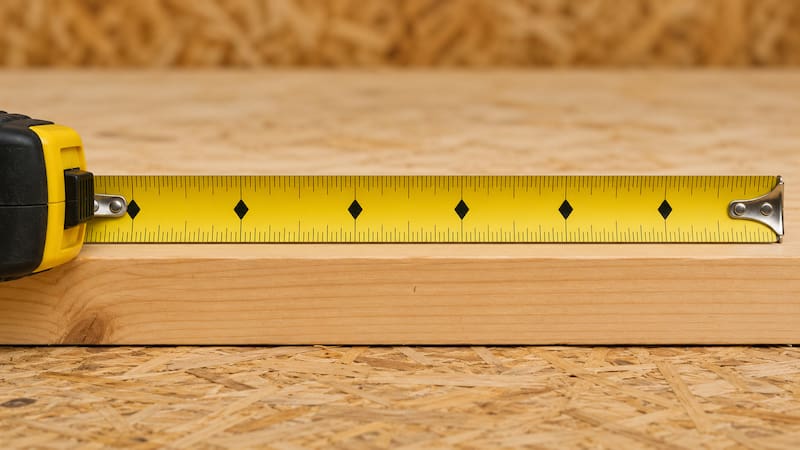
The black diamonds divide a standard sheet of structural wood of 96 inches —8 feet— into exactly five equal sections of 19.2 inches, without the need to do any calculations. That is why the mark repeats at that same interval along the entire tape.

What are the black diamonds on a tape measure for?
The function of the black diamonds is to guide the placement of joists in floor framing. The carpenter hooks the tape from the edge of the first joist and places each subsequent one directly on each diamond, without measuring section by section.
That system eliminates the cumulative error that arises from measuring and remeasuring by hand and turns the tape into a ready-to-use template on the job site.
What it specifically solves
- It divides 8-foot sheets into 5 exact sections: each diamond shows where a joist goes so the sheet is fully supported.
- It prevents floating edges: the ends of the sheets always line up with solid framing.
- It eliminates repetitive manual calculations: it reduces accumulated errors over long distances.

Why are the black diamonds in that place on the tape?
The same tape also shows red rectangles every 16 inches: a different reference that indicates where to place wall studs according to residential building codes in the United States. They are two different standards on the same tool: one for floors, one for walls.
The black diamond is only useful in new construction, additions, or large-scale renovations. In smaller home projects it is never really relevant, which is why most users never learn what it means or why it is there.