
En esta noticia
The Vehicles and Traffic Law of Puerto Rico establishes a series of rules designed to ensure safer traffic on public roads, including signals for maneuvers such as turning, changing lanes, stopping, or slowing down.
These provisions are part of the Puerto Rico Traffic Code and are mandatory for all drivers traveling on the island’s roads.

What does the law establish about signals for turning or changing direction?
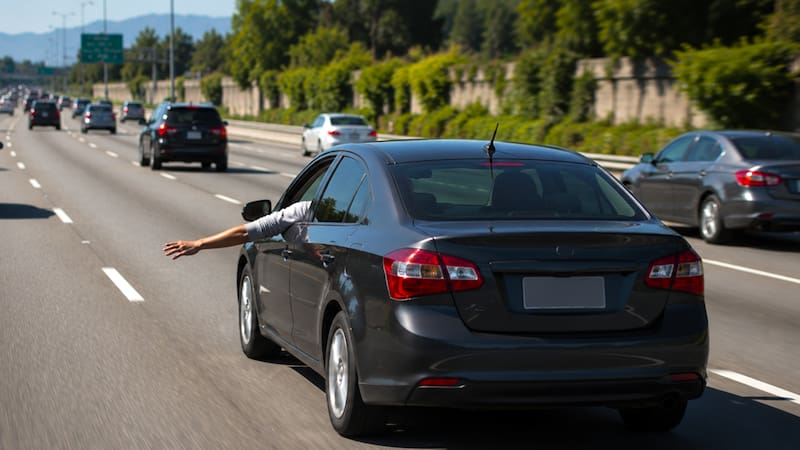
The regulations authorize the use of signals made with the arm and the left hand when the vehicle does not have directional lights or they do not work properly.
The main ones are:
- Left turn: extend the left arm horizontally out of the vehicle.
- Right turn: extend the left arm with the forearm upward, forming approximately a right angle.
- Stopping or slowing down: extend the left arm with the forearm pointing downward.
These signals must be made clearly so that they can be seen and interpreted by other road users.

Why are hand signals important?
The purpose of these signals is to warn in advance of the maneuvers a vehicle will make, contributing to safer and more orderly traffic.
Although they are less common today due to the widespread use of directional lights, Puerto Rican law keeps them as a valid alternative for communicating movements when the vehicle’s signaling system cannot be used.