
En esta noticia
Travelers in the United States now have a digital option for identification at airports. It is Digital ID, a fundamental, free document that makes it possible to verify identity from a mobile device or smartwatch, without needing to present physical credentials.
The tool is integrated into Apple Wallet and uses validated information from the U.S. passport.
It does not replace the passport for international travel, but it seeks to make identification easier on domestic flights and assist those who do not have an ID compatible with Real ID.

How the essential and free document that replaces the passport and Real ID in the United States works
The document is Digital ID, a digital ID generated from U.S. passport data and stored encrypted on the iPhone or Apple Watch. This tool allows travelers to verify their identity in person without needing to hand over the device, using biometric authentication.
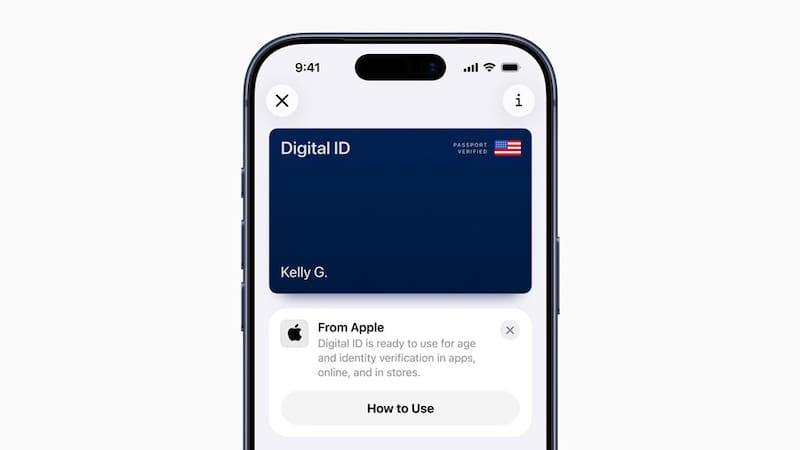
In this initial phase, Digital ID can be used at Transportation Security Administration (TSA) checkpoints for domestic flights within the country. However, it is not valid for international travel or border crossings and does not replace the physical passport in contexts outside the domestic sphere.
What Digital ID allows and what it does not allow
- Accepted for domestic flights within the United States
- Can be used on an iPhone or Apple Watch without presenting physical identification
- Does not replace a passport for international travel

How can travelers use it in the United States and where is it already valid?
Digital ID has begun to be accepted in a beta phase at more than 250 airports in the United States, specifically for in-person identity verification on domestic flights. The rollout is being carried out gradually and, for now, is limited to enabled checkpoints.
To activate it, the user must:
1- Scan the photo page of the passport.
2- Read the embedded chip in the document.
3- Complete a biometric verification using a selfie and facial movements.
The data remains encrypted and stored on the device and only the minimum information required for each verification is shared.