
En esta noticia
Some phrases are uncomfortable because they hit the mark. Plato, one of the most influential philosophers of Ancient Greece, left behind one that remains perfectly applicable to today’s society: “Poverty does not come from the decrease of wealth, but from the multiplication of desires”.
It is not about numbers in a bank account. It is about something that happens much deeper down: the distance between what one has and what one wants.
The phrase is not a condemnation of desires or an apology for resignation. It is a philosophical diagnosis of how dissatisfaction works.
And those who read it today, in a culture that constantly pushes people to desire more, compare themselves, and constantly redefine what it means to have enough, recognize in it something they already knew without having found the words.
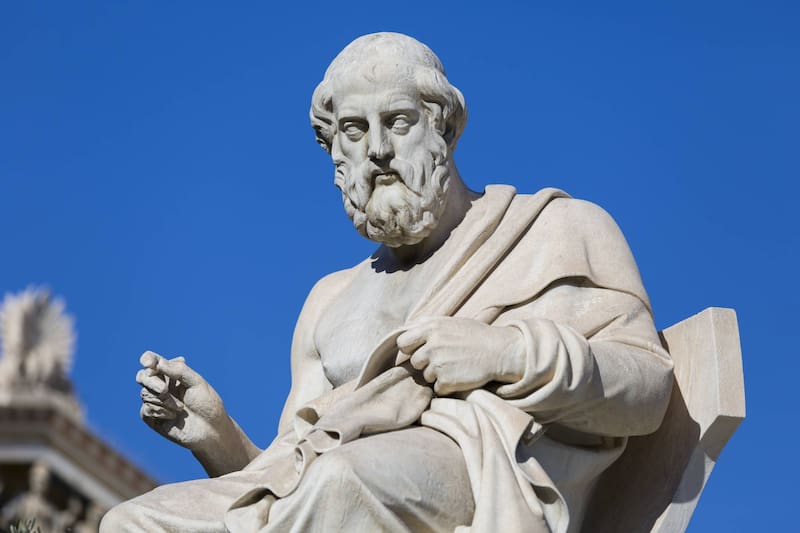
Why did Plato link poverty with desire and not with money?
Plato’s thinking about desires is not separate from his philosophy of the soul. For him, every human being has a rational part, a spirited part, and an appetitive part, which is the part of desires. A well-lived life depends on reason being the one that governs, not appetite.
When desires dominate, the result is not satisfaction but its opposite. Each achievement immediately opens the door to a new desire, bigger and more urgent. The person who earns more money needs more money.
What Plato proposes is a radical reworking of the problem: the solution is not to accumulate more, but to desire in a more orderly way. Not because austerity is a virtue in itself, but because desire without limits is, in his analysis, the deepest source of human dissatisfaction.
The harsh reality of those who had everything and were not happy
History offers its own examples of the paradox Plato describes. Christopher Columbus, to take one that Dostoevsky himself used in one of his most famous reflections, discovered a continent and died in 1506 feeling misunderstood, deprived of the titles he had been promised, and faced with years of political disputes and financial hardship.
The wealth of his feat was not enough to close the distance between what he had and what he felt he was owed.
Dostoevsky, who knew suffering and dissatisfaction well, summed it up in a complementary direction: “Columbus was not happy when he discovered America, but while he was discovering it”.
The two phrases, separated by twenty-two centuries, point to the same problem from different angles: happiness is not in the result, and poverty is not in lack.