

En esta noticia
Across the United States, many small rural towns have been slowly emptying out for decades. As younger generations move to big cities in search of jobs and opportunities, these communities are left with aging populations, closed businesses, and fewer services, and some have almost disappeared from the map.

That is why stories like Elsie Eiler’s surprise people across the country. At 93, she is the only resident left in Monowi, Nebraska, a farm town that once had about 150 people and now holds the Guinness Record for the lowest population.
Eiler arrived at Monowi and grew up around five brothers in a small agricultural community of 134.4 acres and met her husband Rydy at the one-room schoolhouse in town.
The couple settled back in Monowi for a quiet life and witnessed the population dwindle as young folks and industry left the area. Eiler’s husband passed away in 2004, and she became the only resident recorded on the US Census.
What is the daily 12-hour work routine of Elsie Eiler living alone in a town
The 93-year-old woman ended up having to do all of the jobs needed to keep the town alive. She works 12 hours a day, six days a week at the tavern, making coffee, drinks, and food for local farmers.
Her family has owned the tavern since 1971. “This is my home. All my friends are around. Why would I want to leave?” she told the New York Times.
The proud Nebraskan is also the town mayor: “I‘m the whole thing. There’s no need for any elections because I’d be the only one to vote,” she told Reuters. Without her filing the paperwork, the town wouldn’t legally exist. “Like Monowi, I’m too tough to die,” she said.
Why tourists from around the world stop in Monowi
Although she is the only resident, Eiler is rarely alone. Travelers often stop at her tavern out of curiosity, and she says she has welcomed visitors from all 50 states and more than 60 countries, according to Guinness World Records. Prices are a reminder of another era: a beer cost about $2 and a burger $3.50.
The fame doesn’t seem to affect her. “[The attention] doesn’t impress me any, I don’t see what the big deal is,” she said in an interview.
She also has the company of her family and neighbors from nearby farms, who in 2021 threw her a party for her 50 years running the tavern. “They don’t see that it’s real people, and it’s real connections to the people and the land and that place that keep her there,” her daughter, Rene Lassise, told The New York Times.
What will happen to Monowi in the future?
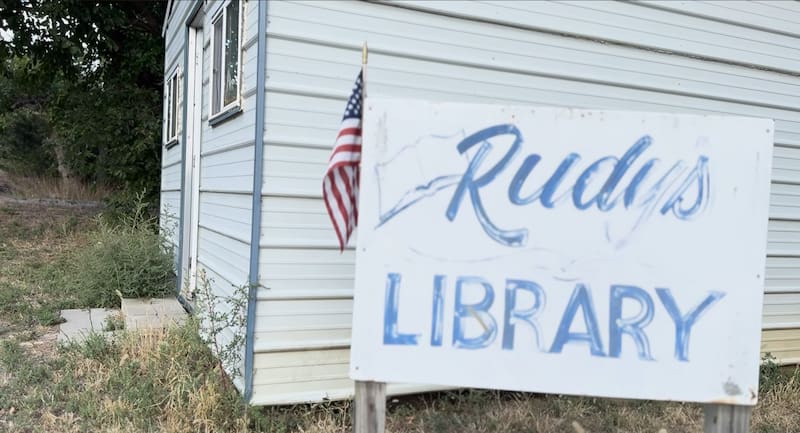
Eiler knows that the future of the town is tied to her own. Without her, there would be no one to run the tavern, keep the library open, or file the paperwork that keeps Monowi legally alive.
“If I let myself sit and think about it, I feel sad that the time will come when I can’t be here anymore,” she said. “I don’t know what the future holds for here, but I’d like to see it keep going. Otherwise, it’s just going to be another bunch of shambled buildings on the side of the road.”