En esta noticia
- David Gross, the scientist who analyzes the future with the logic of physics
- The calculation that led Gross to warn about the next 35 years
- The global threats that worry the Nobel Prize in Physics winner
- Why artificial intelligence increases the risks
- The future of humanity depends on how these risks are controlled
The American physicist David Gross raised alarms by analyzing the future of humanity from a scientific perspective. According to his assessment, different global factors have increased the risks to the survival of civilization.
In an interview with Live Science, the winner of the Nobel Prize in Physics said that the chances of future generations living for many decades could be lower than expected because of threats such as nuclear conflicts and the advance of new technologies.

David Gross, the scientist who analyzes the future with the logic of physics
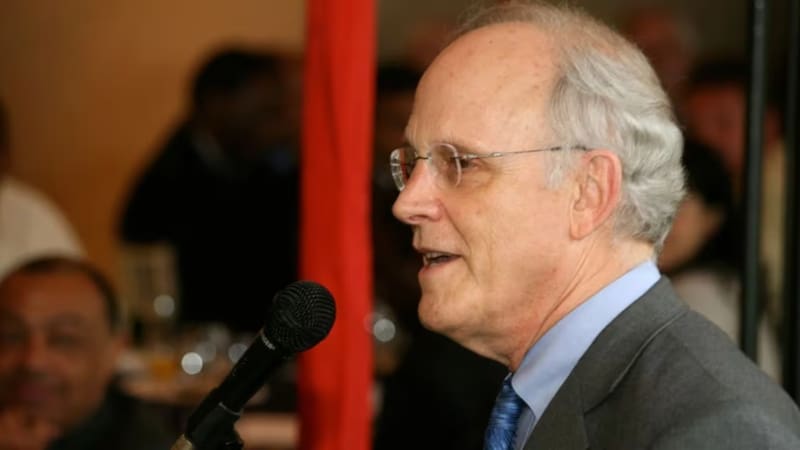
David Gross was born in the United States in 1941 and built a distinguished academic career at institutions such as Princeton and Harvard. During the 1970s, together with Frank Wilczek and H. David Politzer, he made one of the most important discoveries in modern physics: asymptotic freedom.
The discovery revolutionized particle physics and led the three scientists to receive the Nobel Prize in Physics in 2004.
Gross does not base his analysis on a prediction, but on decades of study of complex systems, probabilities, and risk scenarios.
The calculation that led Gross to warn about the next 35 years
The physicist’s analysis starts from a logic commonly used in science: an apparently small risk can turn into a major threat when it accumulates over long periods.
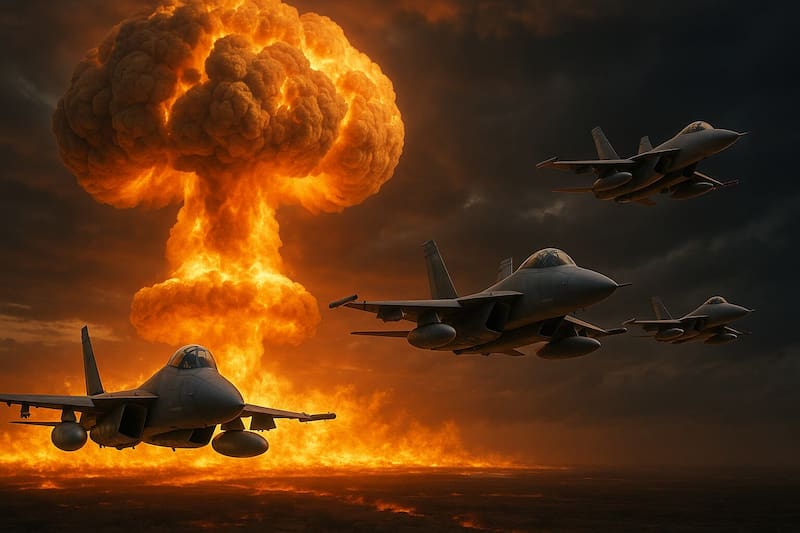
Gross took as a reference the risk of a nuclear war. As he explained, during the Cold War the annual possibility of this type of conflict was around 1%.
Although that figure may have seemed small, projected over decades it represented a considerable danger.
At present, the scientist believes that percentage may have increased. “I feel that this is not a rigorous estimate, that the odds are closer to 2%,” he explained.
With that calculation, Gross maintains that the civilization’s chance of survival in the face of a nuclear conflict could be around 35 years.
The global threats that worry the Nobel Prize in Physics winner
One of the main factors worrying Gross is the weakening of some international mechanisms created to prevent a nuclear escalation.
For decades, different agreements among powers sought to limit the number of strategic weapons and maintain communication channels to reduce the risks of a crisis.
However, the current scenario is more complex than during the Cold War. The world went from a confrontation mainly dominated by two great powers to a scenario with more countries involved.
For Gross, the problem is not only the possibility of an intentional decision, but also the human errors, technical failures, and misinterpretations that can occur during a situation of maximum tension.

Why artificial intelligence increases the risks
The physicist also added a new element to the analysis that did not exist with the same importance during the Cold War: the presence of artificial intelligence in military and defense systems.
According to Gross, these tools have the ability to process enormous amounts of information in a short time, but they can also make mistakes or misinterpret certain patterns.
In a civilian context, an artificial intelligence failure can lead to a wrong recommendation. However, when applied to systems linked to nuclear weapons, the consequences could be much more serious.
The scientist believes that the current challenge is to develop control mechanisms capable of reducing these risks before a combination of political tensions, advanced technology and human errors can generate an irreversible crisis.
The future of humanity depends on how these risks are controlled
David Gross’s warning points to the combination of several factors that can affect global stability.
Nuclear conflicts, artificial intelligence, geopolitical tensions, and failures in security systems are part of a scenario that experts continue to analyze.
For the Nobel Prize winner, the key will be the ability of governments and international organizations to anticipate these risks and create tools that make it possible to protect the future of civilization.