
En esta noticia
- Why China’s missile test caused concern
- Pacific nations are divided over China’s military expansion
- Australia and its allies demand greater transparency
- China’s nuclear arsenal has grown dramatically
- The Congo connection raises another question
- Congo moves to restrict mineral exports
- The Pacific is becoming harder to keep out of the rivalry
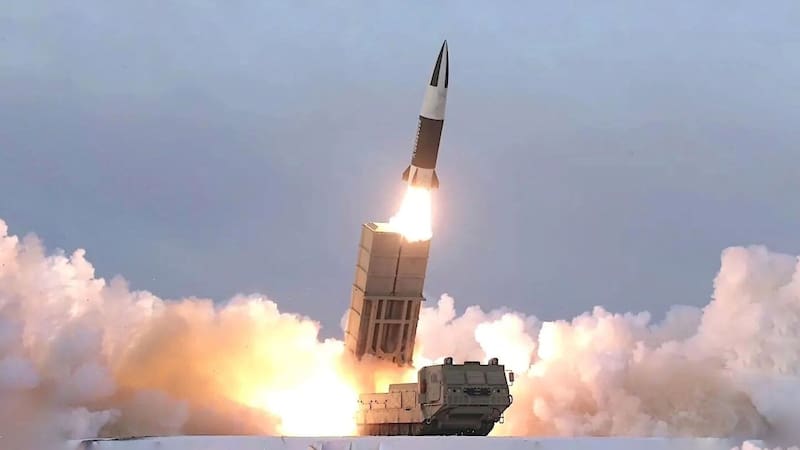
A recent China missile test in the Pacific has triggered a new debate over regional security, exposing growing divisions among Pacific Island nations at a moment when Beijing is rapidly expanding its military capabilities.
The launch involved a nuclear-capable ballistic missile and came shortly after Fiji and Australia signed a major defense agreement. Although the missile was directed toward international waters, several governments criticized Beijing for providing limited information about the test and for contributing to the growing militarization of the Pacific.
The controversy is unfolding as estimates put China’s nuclear stockpile at more than 600 warheads, with U.S. assessments indicating that the arsenal could reach around 1,000 deliverable warheads by 2030.

Why China’s missile test caused concern
The launch was not simply another military exercise.
China fired the missile from a nuclear-powered submarine into the Pacific, using a dummy warhead. It was China’s first known ballistic-missile launch into the Pacific since September 2024.
The timing added to concerns.
The test occurred just hours after Australia and Fiji finalized a defense treaty, Fiji’s first such alliance. For governments that have repeatedly emphasized their desire to keep the Pacific region peaceful, the launch became another sign that competition between major powers is increasingly reaching their waters.
Papua New Guinea Foreign Minister Justin Tkatchenko described the test as inappropriate, while acknowledging that China remains a close partner of his country.
Beijing, however, defended the operation, saying the test was conducted safely and urging other countries not to overinterpret it.
Pacific nations are divided over China’s military expansion
The controversy has exposed a difficult political reality.
Pacific Island countries may share concerns about militarization, but they do not all have the same relationship with China, Australia or the United States.
During a recent meeting in Suva, foreign ministers were unable to agree on a collective statement condemning the Chinese test. Countries including Kiribati and Nauru, which have strengthened their ties with Beijing, reportedly did not support the proposed wording.
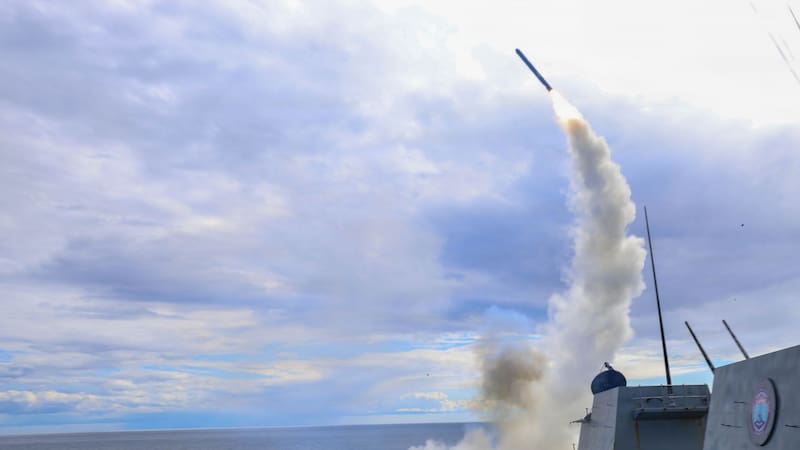
That disagreement matters because Pacific leaders endorsed an “Ocean of Peace” declaration in 2025, committing to protecting the region and strengthening international peace and security.
The missile launch has therefore created a dilemma: governments want greater security but do not necessarily want their countries and waters to become part of a confrontation between China and Western powers.
Australia and its allies demand greater transparency
The criticism has now expanded beyond the Pacific island governments.
Australia joined a U.S.-led statement signed by 39 other countries that condemned recent missile testing in the Pacific and called for greater advance notification of launches involving intercontinental ballistic missiles, submarine-launched ballistic missiles and space launch vehicles.
The group called for countries, particularly nuclear-armed states, to provide at least 24 hours’ notice before such launches, including information about the expected timing and trajectory.
The concern is not simply the existence of China’s missile program.
Governments argue that insufficient notification can increase the risk of miscalculation, particularly in a region where military activity by China, the United States and their respective partners has increased.
China’s nuclear arsenal has grown dramatically
Behind the controversy is a much larger strategic development.
China’s nuclear arsenal has expanded substantially over the past decade. Independent researchers estimate that the country now has roughly 600 nuclear warheads, while U.S. assessments have placed the stockpile in the low 600s.
The Pentagon has also assessed that China could possess as many as 1,000 deliverable nuclear warheads by 2030 if its current trajectory continues.
That expansion is occurring alongside a broader modernization of China’s nuclear forces, including land-based missiles, submarine-launched systems and other strategic delivery platforms.
China does not publicly disclose the exact size of its nuclear arsenal, meaning outside estimates remain essential to understanding the scale of the buildup.
The Congo connection raises another question
At the same time, a separate investigation has raised questions about China’s access to uranium associated with cobalt exports from the Democratic Republic of Congo.
The issue stems from the fact that uranium naturally occurs alongside cobalt and copper in parts of the Congolese mining belt. Researchers have identified previously undocumented uranium in cobalt-hydroxide exports and estimated that large quantities of naturally occurring uranium may have left the country mixed with mineral shipments over the past two decades.
The findings have attracted particular attention because much of the material was destined for China.
However, this does not establish that China deliberately obtained uranium for nuclear weapons.
The Chinese mining company CMOC has rejected allegations that its cobalt exports contained excessive uranium, while Congolese authorities have launched an investigation into the issue.
The government has also indicated that it intends to work with international experts, including the International Atomic Energy Agency, to determine the extent of the problem.


Congo moves to restrict mineral exports
The controversy comes as the Democratic Republic of Congo takes steps to change how its strategic mineral resources leave the country.
The government has moved to restrict exports of copper and cobalt concentrates in an effort to encourage more processing inside the country. That decision could affect companies and international supply chains that depend heavily on Congolese cobalt.
For China, the development is significant because the country has deep commercial ties with the Congolese mining sector and is a major destination for cobalt-related exports.
But the uranium issue remains separate from the broader cobalt trade. Available evidence indicates that uranium has been found as a contaminant or byproduct in some mineral shipments; whether any of that material was intentionally recovered for nuclear purposes remains under investigation.
The Pacific is becoming harder to keep out of the rivalry
The China missile test, the country’s expanding nuclear weapons arsenal and the growing number of security agreements across the region are all part of a larger shift.
China has increased its military activity across the Pacific, while the United States and its allies have expanded exercises, partnerships and military cooperation of their own.
The result is a region where smaller island nations are increasingly being asked to balance security concerns with their desire to maintain political independence.
For Pacific governments, the challenge is becoming more complicated.
Some see stronger defense partnerships as necessary protection. Others fear that allowing more military infrastructure, exercises and strategic agreements could eventually turn the Pacific into another arena for great-power competition.
The disagreement over China’s missile test shows just how difficult it will be to maintain a unified position.
The Pacific may still aspire to be an “Ocean of Peace,” but the latest missile launch demonstrates that keeping military rivalry away from the region is becoming increasingly difficult.