
En esta noticia
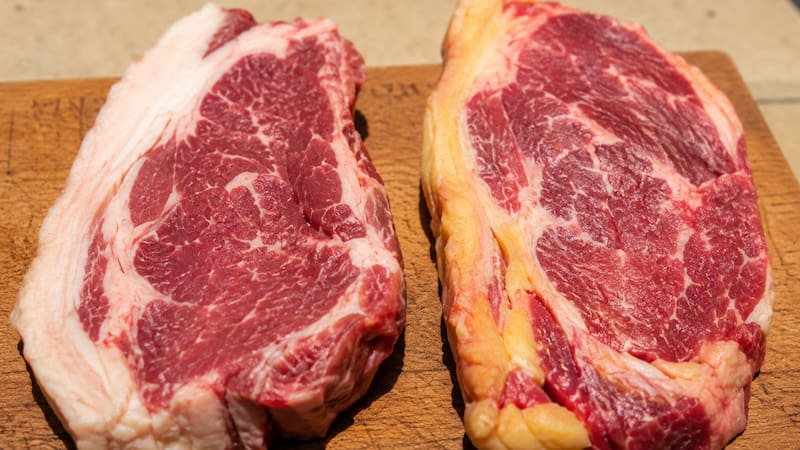
When buying meat, it is common to wonder what the difference is between cuts that have white fat and those that have yellow fat.
As a starting point, it is essential to note that this characteristic is not enough to determine the quality of the meat, but rather in most cases it is simply a consequence of the animal’s diet, the production system, or other factors such as its breed and age.
The difference between meat with white fat and yellow fat
The main difference for a cut to have white fat or yellow fat is the diet the animal received. Cattle raised on pasture consume high amounts of beta-carotenes, natural pigments present in plants. These compounds can accumulate in fatty tissue and give it a yellowish color.
“High levels of beta-carotene present in many grasses can cause the fat of grass-fed beef to have a yellowish tint. This is not a safety problem; however, it may not be as visually appealing to some consumers“, notes an article from the Institute of Agriculture and Natural Resources at the University of Nebraska-Lincoln.
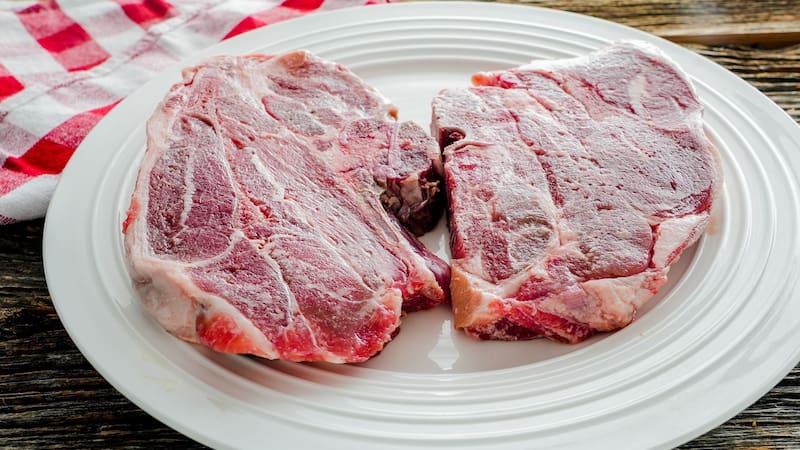
On the other hand, feedlot animals are fed mostly grains, such as corn or soy, and develop fat with lighter tones or even completely white.
Does yellow fat mean the meat is old?
No. The yellowish color of the fat does not mean that the meat is expired, spoiled, or unsafe for consumption, as long as the cut has
- A bright and uniform color
- A normal, firm texture
- A good aroma
Very dark fat, with strange spots or accompanied by an unpleasant smell, may be a sign of spoilage.

Which of the two options is better to buy?
Since the color of the fat does not affect the quality of the meat at all, this will be an absolutely personal decision, based on the consumer’s preferences.