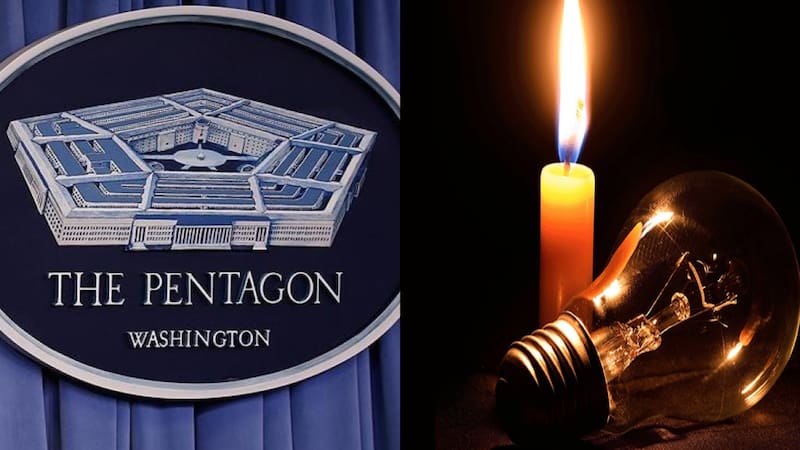

A new warning from the Pentagon shook the international stage: climate change is not only an environmental threat but could also trigger a global power outage with devastating effects.
This is stated in a recent report prepared together with the United States Army War College, in which the strategic risks the country will face in the coming decades are analyzed.
Global blackout: a silent threat is approaching
According to the report, extreme phenomena such as heat waves, wildfires, hurricanes, and floods could increase in frequency and intensity over the next 20 years, as a direct result of global warming.
This constant pressure on energy infrastructure could lead to the collapse of power grids in different regions, including North America.

Although no exact date is given, the forecast is clear: the current power system is not prepared to withstand the advance of extreme weather.
Why is the United States at risk?
The document notes that a large share of U.S. military bases are located in vulnerable areas, exposed to fires, storms, or floods. While some have independent power systems, many others depend entirely on the regional power grid.
In the event of a prolonged blackout, the country could see its defensive capability affected, both in logistical terms and in operational response.
In addition, the civilian population would also suffer the consequences: prolonged outages in hospitals, disruptions to the drinking water supply, telecommunications, and essential services.
Climate change and national defense: a new priority
Far from being only an environmental issue, climate change is emerging as a national security problem. The Pentagon warned that extreme events are already affecting military infrastructure, and that urgent investment is needed to modernize the energy system and adapt it to future challenges.
The report ends with a key warning: without concrete action to strengthen energy resilience, a major global blackout is not a distant possibility, but a likely scenario.