
En esta noticia
In countries like the United States, having a garbage disposer or garbage disposer is the norm in almost every home. However, despite its usefulness, this appliance can develop faults and break down if it is not properly maintained.
For this reason, there are several tricks for cleaning the disposer, such as grinding ice with salt, pouring white vinegar and baking soda, and then rinsing. This method is simple and economical, and only minimal safety measures are needed for it to work.

What is the point of pouring baking soda and white vinegar into the disposer?
The combination is used to freshen and keep the inside of the disposer clean. Food waste can build up in the chamber, the grinding ring, and under the splash guard, where it eventually creates unpleasant odors.
Among its most common benefits are:
- Reducing bad odors caused by food scraps.
- Helping loosen surface residues stuck to the inside.
- Complementing the periodic cleaning of the disposer.
- Making it easier to flush out particles later with water.
- Preventing small bits from remaining accumulated for too long.
How do you use this cleaning trick safely?
Before starting, the disposer must be completely turned off and unplugged. If there is any visible object, it should be removed only with tongs or long pliers.
One way to carry out the cleaning is as follows:
- Turn off and unplug the disposer.
- Check that there are no large objects or clogged residues.
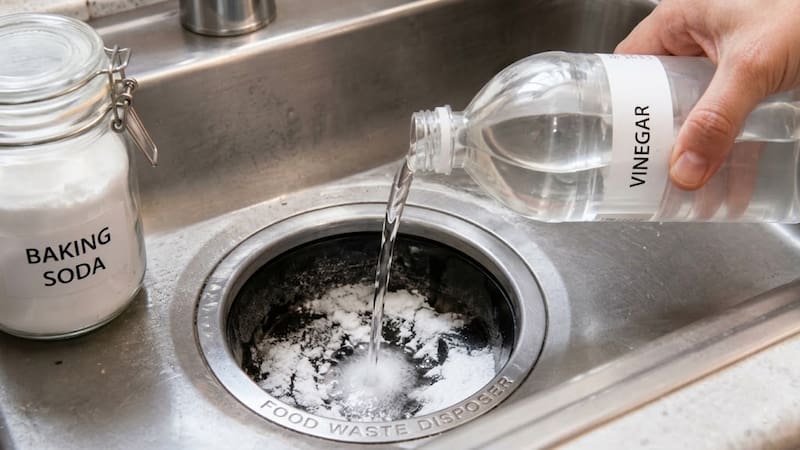
- Add approximately half a cup of baking soda inside.
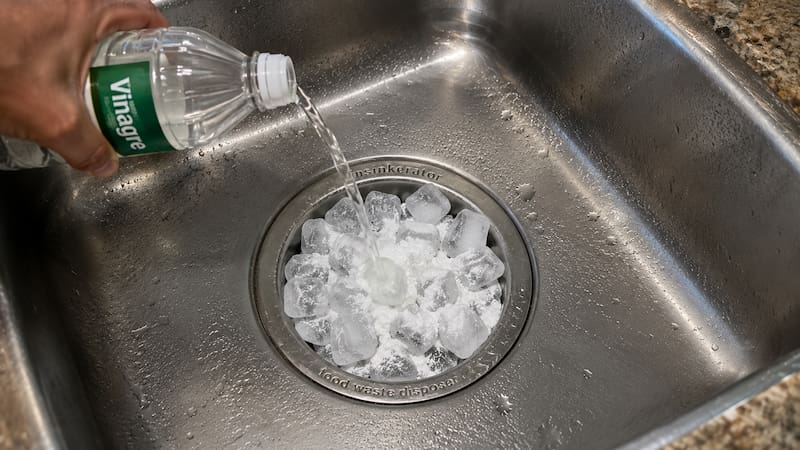
- Slowly add one cup of white vinegar.
- Let the foam act for about 15 minutes.
- Clean the rubber splash guard separately, since food often accumulates there.
- Plug the disposer back in and rinse with cold water.
Some people grind ice with salt before starting the procedure to loosen any food residue.
Why do they recommend pouring baking soda and white vinegar into the disposer?
The recommendation is mainly related to the buildup of residue and the appearance of odors. Food particles and grease can become trapped in areas that running water does not fully clean, especially under the splash guard.
Baking soda is useful for controlling odors, while the effervescence generated when vinegar is added can help loosen surface residues so they can then be washed away during rinsing.