
En esta noticia
Choosing how to walk a dog can raise questions, especially when it pulls on the leash or keeps moving around during outings. Among the most common options are the standard harness and the no-pull harness, two alternatives that offer different ways to secure the animal and control its movements.
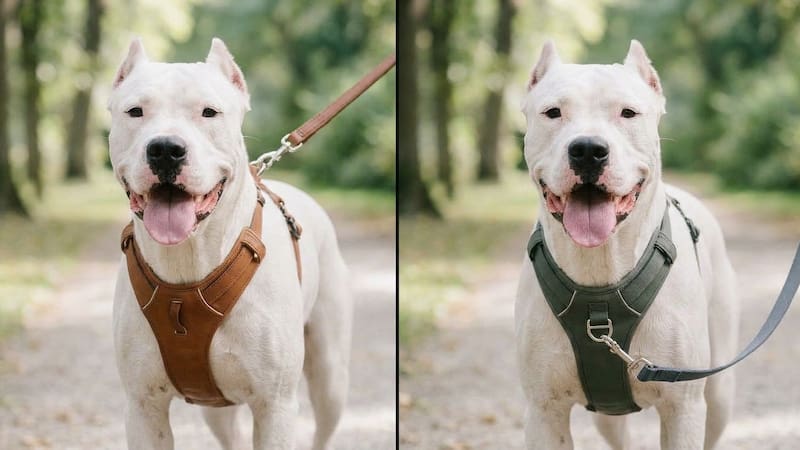
Although both are worn around the body, they do not work the same way because some no-pull models have a front clip that helps redirect the dog when it tries to move forward, while conventional harnesses usually attach the leash to the back.
However, design and fit also affect comfort and freedom of movement. In that regard, a scientific review published in 2025 in the journal Animals examined research on collars and harnesses for dogs and their effects on gait, body pressure and stress signals.

Standard or No-Pull Harness for Dogs: Which Can Make Walks Easier if Your Dog Pulls on the Leash
Noticing the dog’s behavior is essential when buying a harness. That is why, if it pulls on the leash or has trouble walking beside its owner, a front-clip no-pull model can help redirect it and make handling easier.
By contrast, if it walks calmly and does not need much correction, a standard harness with a back clip may be enough. The scientific review published in 2025 in the journal Animals analyzed 21 full articles and two research abstracts on collars and harnesses for dogs. The authors concluded that the choice should take into account both the dog’s needs and those of the person walking it.
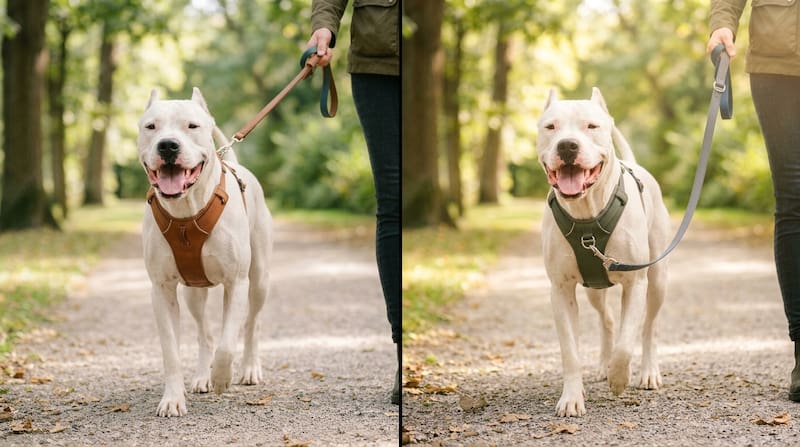
For dogs that pull, the review notes that front-clip harnesses that do not tighten or constrict when the dog pulls can offer a balance between control and comfort.
Before buying, it is helpful to distinguish between two options:
- Standard harness with back clip: the leash attaches to the back. It may be enough for dogs that walk without constantly pulling.
- No-pull harness with front clip: the leash attaches to the chest and gently redirects the dog when it tries to move forward by pulling.

Which Harness Can Protect Your Dog’s Comfort Based on Its Size and Walking Style
In addition to making walks easier to manage, a harness should let the dog move without discomfort. To choose one, buyers can look at where the straps rest, how it fits the body and whether it limits the movement of the front legs.
The VCA Animal Hospitals guide, prepared by veterinary professionals and animal behavior specialists, warns that some front-clip harnesses can rest on the shoulder joints and restrict movement. For that reason, it recommends paying attention to design and fit, since the harness should fit snugly without rubbing behind the elbows or keeping the dog from moving its legs normally:
- Fit: it should stay secure without squeezing or causing chafing.
- Freedom of movement: the straps should not hinder the front legs or press directly on the shoulder joints.
- Design: Y-shaped models or those with a chest strap can be alternatives for dogs that do not need as much correction while walking, though it is worth checking how they fit the body.
- Special needs: if the dog has breathing problems, is older, has neck pain or has any mobility issue, it is advisable to consult a veterinarian about those specific cases to choose the right equipment.