En esta noticia
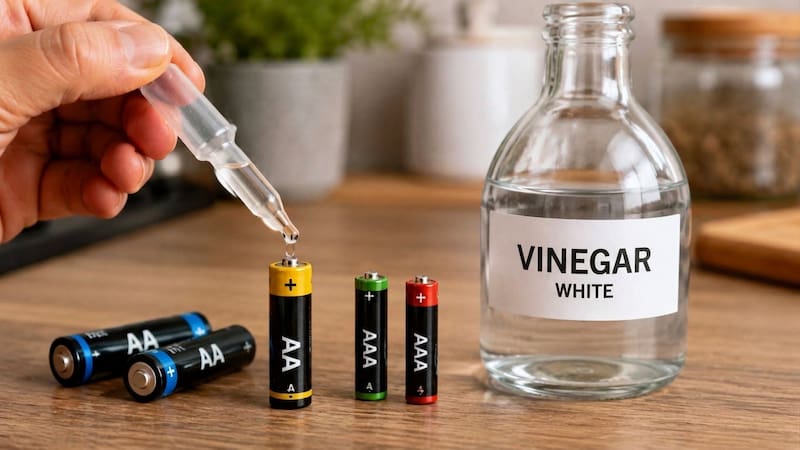
It is common to find a whitish or crystallized layer in the battery compartment of some electronic devices. Faced with this problem, one of the most common home methods is to apply vinegar to the metal contacts affected by AA or AAA batteries.
Far from being an unfounded recommendation, the procedure responds to a chemical reaction. The acetic acid present in vinegar can help neutralize the alkaline residues left by certain batteries when they leak, thus facilitating the cleaning of the device’s metal contacts.

What is it for to put vinegar on batteries and their compartment?
Vinegar does not serve to recharge or reactivate depleted batteries. Its main function is to clean the corrosion or sulfation produced when an alkaline battery suffers an internal leak of chemical components.
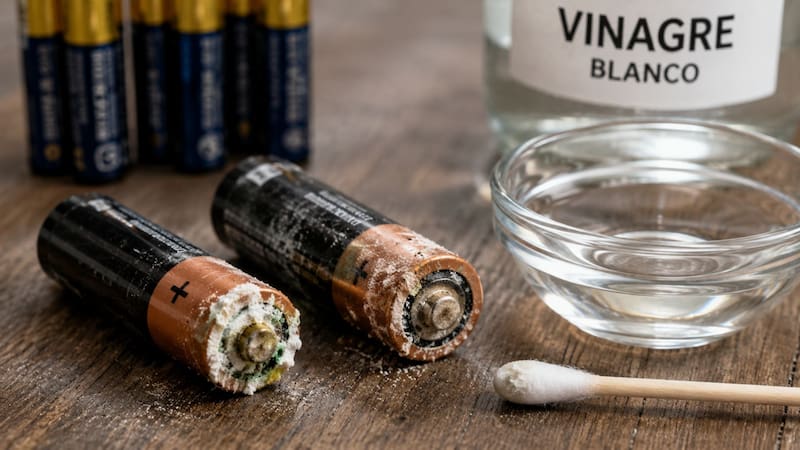
When AA or AAA batteries are left forgotten inside a remote control, toy or computer for a long time, caustic substances are usually released. These form a white or greenish crust on the springs and metal terminals of the device.
By putting a small amount of vinegar on the affected area, you dissolve those salt deposits, clean the terminals and manage to restore the electric current so that the device turns on normally again.
Why do experts and manufacturers recommend it?
The recommendation of this home trick is based strictly on acid-base neutralization chemistry.
- Composition of batteries: according to the FAQ section of battery manufacturers such as Duracell (Duracell FAQ), alkaline batteries contain potassium hydroxide ($\text{KOH}$), a strongly alkaline and corrosive substance.
- Action of vinegar: commercial white vinegar contains diluted acetic acid. When it comes into contact with potassium hydroxide, it generates an immediate neutralization reaction that transforms the hard corrosion into a soluble salt and water.
Specialized portals for technical support and electronic maintenance, such as iFixit, support the use of mild acids (such as vinegar or lemon juice) because they break down sulfation safely without the need to sand aggressively or scratch the nickel coating of the terminals.

How do you apply vinegar to safely clean corrosion?
To carry out this procedure at home without damaging the circuits or compromising personal safety, specialists suggest a step-by-step protocol:
- Remove the damaged batteries: discard the sulfated batteries at an appropriate recycling point. Never soak the batteries in vinegar.
- Use protection: wear gloves and protective goggles, as potassium hydroxide can irritate the skin and eyes.
- Application with a swab: moisten the tip of a cotton swab or a soft toothbrush with white vinegar. Do not pour the liquid directly into the device.
- Rub the contacts: gently run the swab over the rusty springs and edges until all the white buildup is removed.
- Cleaning and drying: clean the residue with a cloth dampened in isopropyl alcohol to remove moisture and excess acetic acid. Make sure everything is completely dry before placing new batteries.
What risks are there in using vinegar in electronic devices?
Although it is an effective method, applying vinegar improperly entails significant risks. Excess liquid can seep into the printed circuit board (PCB), which will trigger short circuits or permanent acid corrosion on the copper traces.
Likewise, if the vinegar residue is not cleaned with isopropyl alcohol or a dry cloth, the vinegar’s own acid will eventually oxidize the device’s steel components over time.