
En esta noticia
A simple plastic bottle filled with water can become an alternative for lighting dark spaces during the day, especially in homes that have few windows or limited natural light entry.
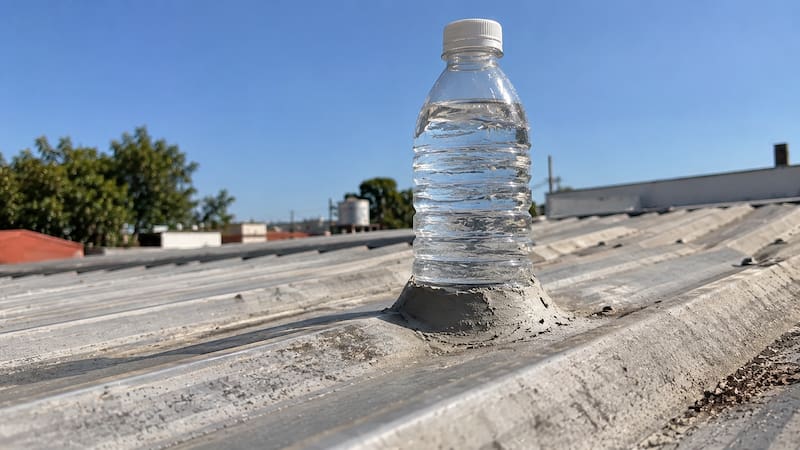
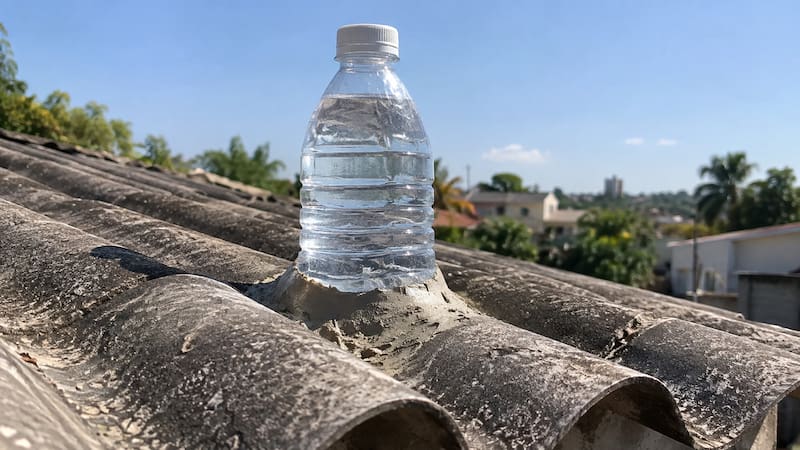
Known as the “Moser lamp”, the method consists of inserting part of the transparent container into the roof to take advantage of the sun’s rays. The system, which was born in Brazil, over the years spread to more than 30 countries.

The origin of this trick: Why is this trick used in more than 30 countries?
The method is named after Alfredo Moser, a Brazilian mechanic from Uberaba who developed the idea in the early 2000s, in a context marked by problems in the electricity supply in Brazil.
His proposal consisted of passing through the roof a transparent plastic bottle filled with water, leaving the upper part exposed to the sun. In this way, it could make use of outdoor lighting to bring brightness to interior spaces that remained dark during the day.
The initiative gained an international dimension starting in 2011, when the organization MyShelter Foundation promoted the Liter of Light program in the Philippines, which took this system as an economical and easy-to-replicate technology.
During its first 20 months, the project reached more than 150,000 households in the Philippines and about 350,000 homes across 15 countries. Later, UNESCO references recorded the expansion of the initiative to more than 30 countries.
Its expansion is mainly explained by:
- The use of inexpensive and easy-to-obtain materials.
- The possibility of reusing plastic bottles.
- Its installation in homes with little natural light.
- The fact that it does not need electricity during the day.
- The possibility that the communities themselves learn to build and install the system.
What is it for to place a plastic bottle with water on the roof?
The bottle works as a kind of indoor solar lamp. When the sun’s rays reach the part of the container that protrudes from the roof, they pass through the plastic and the water.
The liquid allows light to be refracted and dispersed in different directions, making the brightness spread inside the room instead of concentrating only in one point.
For this reason, the method is especially useful in rooms with opaque ceilings, few windows, or limited natural light entry.

How to do it correctly?
The principle of the system is simple: a transparent PET bottle filled with water is used, partially inserted through an opening made in the roof, leaving part of it outside to receive direct sunlight.
Some versions also include a small amount of bleach or chlorine in the water to delay the appearance of algae and keep the liquid transparent for longer.
It is not advisable to simply drill any roof and place a bottle.
For the system to be safe, it is necessary to:
- Evaluate beforehand the material and structure of the roof.
- Make an opening suited to the bottle’s diameter.
- Place the container firmly, leaving part exposed to the outside.
- Seal and waterproof the entire perimeter properly.
- Check that there are no water leaks.
- Review the relevant building regulations before modifying a roof.