En esta noticia
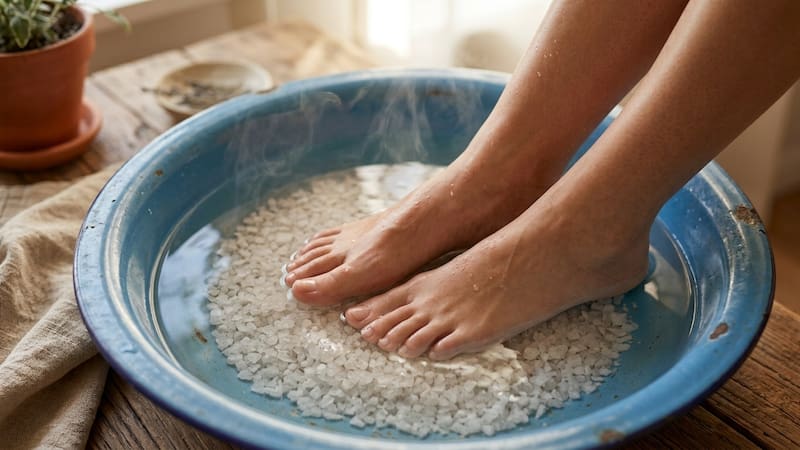
Washing your feet with salt and warm water is a home remedy that many people add to their routine to rest after a long day, relieve the feeling of tiredness, and care for the hygiene of this part of the body. Although the procedure is simple, its possible benefits depend on the temperature of the water, the amount of salt used, and the condition of the skin.
The foot bath is usually done at the end of the day, especially after spending many hours standing, walking too much, or wearing closed shoes. The combination of warm water and salt can create a feeling of relaxation, although it should not be considered a medical treatment for circulation problems, infections, or persistent pain.

What washing your feet with salt and warm water is for
One of the main reasons more and more people turn to this practice is the sense of rest produced by warm water. The heat can help temporarily relax the muscles and make the feet feel less stiff after a demanding day.
Among the effects some people seek are:
- Temporarily relieve tiredness in the feet.
- Generate a feeling of relaxation before sleeping.
- Soften hardened skin, especially on heels and soles.
- Make it easier to clean away sweat and dirt.
- Temporarily reduce the feeling of tension after walking or standing for a long time.
Salt can also help loosen traces of dirt and dead skin when used gently. However, it does not by itself eliminate fungi, bacteria, or infections. There is also not enough evidence to say that a foot bath with salt “draws toxins” out of the body.

How to prepare a salt foot bath
To do this at home, you can use a clean container large enough to place both feet in.
Step by step
- Fill the container with warm water, never too hot.
- Add a small amount of salt and mix until it dissolves.
- Place the feet in for about 10 to 15 minutes.
- Remove the feet and dry them carefully, especially between the toes.
- Apply a moisturizing cream if the skin is dry.
There is no need to use large amounts of salt. One or two tablespoons in a container of water are usually enough for a home bath. The water should feel pleasant to the touch and should not cause burning, intense redness, or discomfort.
Does salt help against fungi or bad odor?
The bath with warm water and salt can help clean the feet and temporarily reduce the feeling of moisture or dirt. However, it should not be used as a replacement for an antifungal treatment when there are fungi in the nails or skin.
Bad odor is usually related to sweating and the growth of microorganisms inside footwear. To prevent it, it is more important to:
- Wash your feet every day.
- Dry them well after bathing.
- Change socks frequently.
- Wear ventilated footwear.
- Let shoes dry completely.
- Consult a professional if there is itching, flaking, cracks, or changes in the nails.
If the odor persists or appears along with skin lesions, it may be necessary to determine whether there is a fungal infection or another skin condition.

Precautions before using salt and warm water
Although it is usually a safe practice for most healthy adults, not everyone should do foot baths without first consulting someone.
People with diabetes, sensitivity problems, poor circulation, open wounds, or skin diseases should be especially careful. In these cases, water that is too hot can cause burns without the person noticing, while the salt can irritate injured areas.
It is also advisable to avoid the procedure if there are:
- Open cuts or blisters.
- Bleeding.
- Intense irritation.
- Active eczema.
- Visible infections.
- Severe pain or sudden swelling.
Salt should not be applied directly to wounds, as it can cause burning and irritation. In addition, soaking the feet for too long can dry out the skin and promote cracks.
What experts recommend
A foot bath with salt and warm water can be part of a hygiene and relaxation routine, but its benefits should be understood as temporary and complementary. It does not replace medical consultation when there is persistent pain, swelling, color changes, wounds, or signs of infection.
To care for the feet, specialists usually prioritize daily cleaning with water and mild soap, careful drying, moisturizing the skin, and wearing comfortable footwear. Salt can be added occasionally if it does not cause irritation, although it is not essential to obtain the relaxing benefits of warm water.
Washing your feet with salt and warm water can help you rest and clean the skin, but it is not a cure for fungi, poor circulation, or other diseases. If symptoms appear that do not go away, the most advisable thing is to consult a doctor or dermatologist.