
En esta noticia
In the home and sustainable cleaning, more and more people are looking for natural alternatives that reduce the use of harsh chemicals in the kitchen.
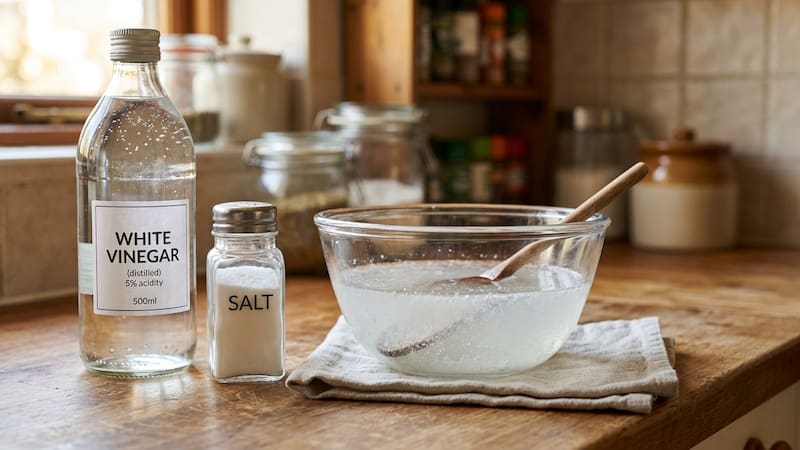
In response to this need, organizations dedicated to environmental management and consumer well-being, such as Oregon Metro, confirm that the mixture of pure white vinegar and salt acts as a powerful surface cleaner capable of effectively removing adhered layers of grease.
Understanding the chemical basis behind this mixture and knowing the correct application method makes it possible to optimize surface cleaning through this mixture.
The scientific explanation: why the reaction between acetic acid and sodium chloride cuts through grease
The degreasing power of this homemade method is due to a simple but highly effective chemical reaction between its two main components.
On one hand, white vinegar contains approximately 5% acetic acid which, when used undiluted in water, maintains the concentration needed to break the chains of fatty acids and oils adhered to metal.
On the other hand, adding table salt (sodium chloride) enhances the acidity of the solution and introduces a slight physical abrasion through the undissolved crystals, allowing one to mechanically dislodge embedded dirt without damaging the steel.
How to apply the vinegar and salt mixture step by step
To prepare and use this homemade surface cleaner safely and efficiently at home, it is advisable to follow a series of specific steps:
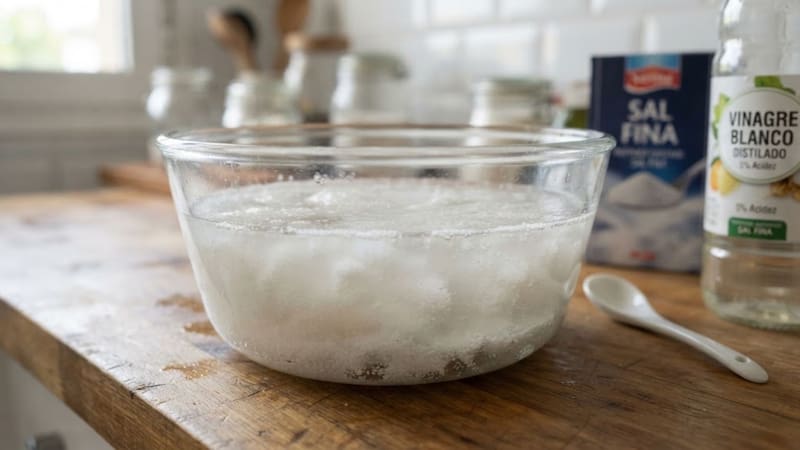
- Prepare the undiluted mixture: in a small, clean container, add pure white vinegar and mix in salt (Oregon Metro does not specify the exact proportion of both ingredients for this mixture). It is essential not to add water, since diluting the solution reduces the acidity needed to dissolve greasy matter.
- Perform a preliminary test: before covering a large surface, apply a small amount of the preparation to an inconspicuous area to verify that the acidity does not alter the color or finish of the material.
- Scrub with a soft cloth: soak a non-abrasive sponge or microfiber cloth with the solution and rub in circular motions over the area with built-up grease, allowing the salt to provide slight mechanical friction.
- Rinse and dry immediately: once the greasy residue has been removed, clean the surface with a cloth dampened with clean water to remove any remaining salt and dry completely with a dish towel to avoid water marks or rust.
On which household surfaces this cleaner can be used
This homemade combination is ideal for use on stainless steel countertops, kitchen sinks, faucets, and the exterior base of resistant pots or pans that accumulate layers of soot and stuck-on grease.
It also works effectively on the surfaces of kitchen appliances and wooden or synthetic plastic cutting boards, helping to disinfect and eliminate persistent odors.

Where it should not be applied and which mixtures should be avoided
On the contrary, its use must be strictly avoided on materials sensitive to acidic substances, such as marble, unsealed granite, limestone, and delicate coatings, since acetic acid can dull or permanently damage them.
This solution should also never be combined with bleach or other chemical cleaners, since the reaction generates toxic gas fumes harmful to health.