En esta noticia
Toilet limescale can be one of the most difficult types of buildup to remove, especially when hard water leaves behind thick white, gray, or brown mineral deposits. While baking soda and vinegar are commonly recommended as household cleaning solutions, another simple method can be more effective for stubborn stains.
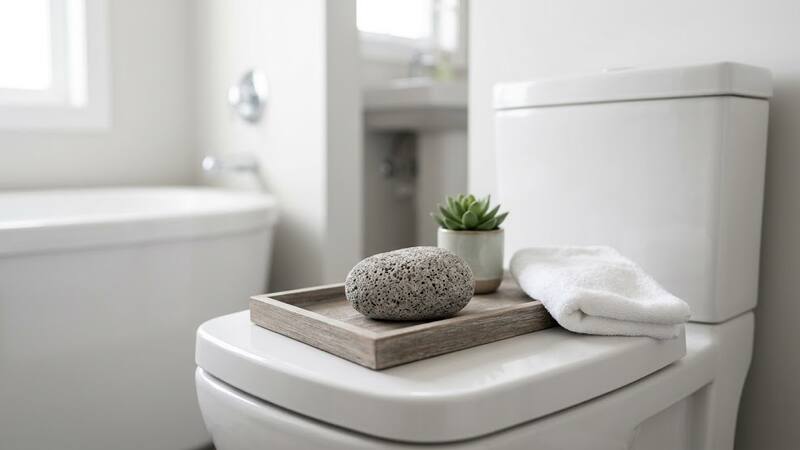
A pumice stone can help remove hardened limescale from the toilet bowl without relying on harsh chemical cleaners. When used correctly, it can gradually wear away mineral deposits that regular scrubbing often fails to remove.
How a Pumice Stone Helps Remove Toilet Limescale
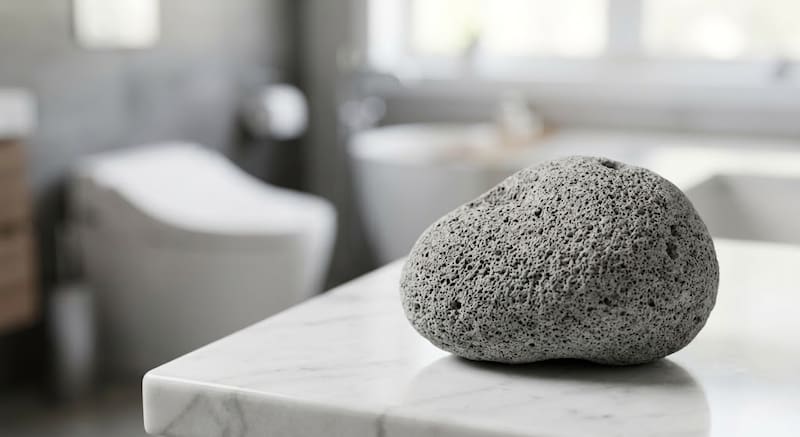
Pumice is a porous volcanic stone that is commonly used for removing hardened buildup. Its abrasive surface can help break down mineral deposits that have accumulated on porcelain surfaces.
The key is to use the stone carefully and keep both the pumice stone and the toilet surface wet. This reduces friction and helps prevent unnecessary scratching while the buildup is being removed.
How to Use a Pumice Stone on a Toilet
First, lower the water level in the toilet bowl so the affected area is easier to reach. Soak the pumice stone in water and make sure the porcelain is also completely wet.
Gently rub the stone over the limescale using small, controlled movements. Avoid applying excessive pressure and periodically rinse the area to check your progress.
Once the buildup has been removed, flush the toilet and clean the surface normally. The technique may need to be repeated if the limescale is particularly thick.
What to Keep in Mind Before Trying This Trick
Pumice stones should only be used on compatible porcelain surfaces and with plenty of water. It is important to avoid using a dry stone or aggressive scrubbing, as this can increase the risk of damaging the finish.
For colored, delicate, coated or non-porcelain toilet surfaces, check the manufacturer’s cleaning recommendations before using an abrasive tool.

Why Limescale Builds Up in Toilets
Limescale is primarily caused by minerals such as calcium and magnesium found in hard water. Over time, these minerals can accumulate around the waterline and other areas of the toilet bowl.
Regular cleaning can help prevent deposits from becoming deeply embedded. However, once limescale has hardened, conventional toilet cleaners and household mixtures may not always be enough to remove it completely.
A Simple Alternative to Baking Soda and Vinegar
Baking soda and vinegar are popular ingredients in homemade cleaning recipes, but they are not the only option for dealing with toilet limescale. A wet pumice stone provides a mechanical approach by physically removing hardened mineral buildup.
Used carefully on suitable porcelain, this simple trick can make it easier to tackle stubborn toilet stains without complicated cleaning products.