
En esta noticia
The skin care routines gained an important place in the lives of a large part of the population and therefore, several philosophies emerged regarding product formulation and the number of steps in routines.
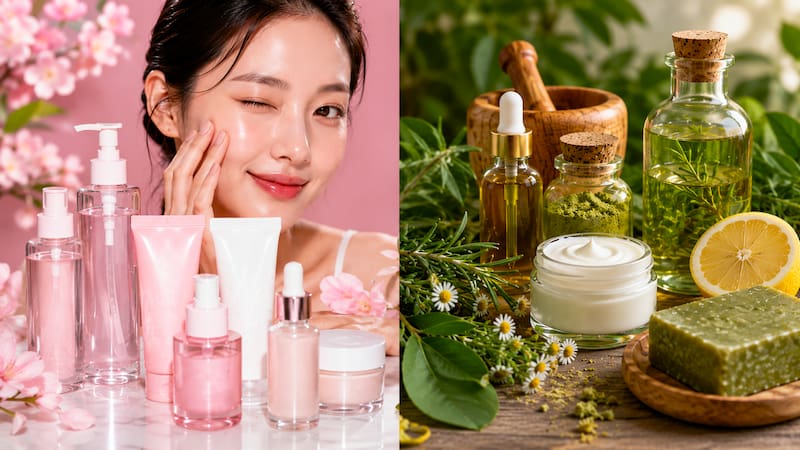
Particularly the Korean skincare gained relevance after the boom of Asian culture in recent years, since major figures from this country are references for the main brands. Conversely, there are natural methods and products.

Korean skincare vs. natural skincare: What are the main differences?
Although both methods and products aim to care for skin health according to each person’s dermatological needs, they use different philosophies in their formulations. The choice between one and the other will depend not only on skin type, but also on each person’s individual needs and preferences.
Korean skincare: main benefits and characteristics
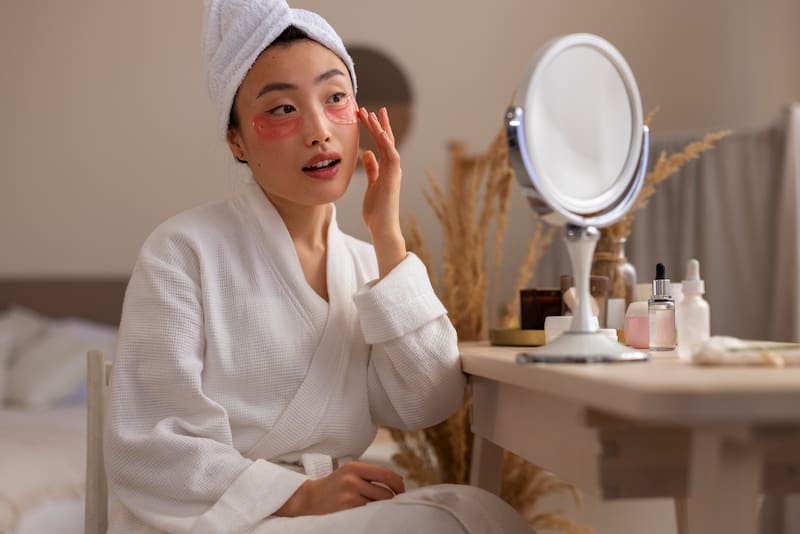
Korean skincare differs from other methods by having a preventive approach. It focuses on keeping the skin hydrated and strengthening the skin barrier before visible problems appear.
These are multi-step routines, with several products, although they can also be adapted with fewer steps depending on each person’s needs.
Among its most recurring ingredients are:
- Hyaluronic acid
- Niacinamide
- Ceramides
- Centella asiatica,
- Snail mucin
- Fermented extracts
In addition, they also have light textures that promote hydration without leaving a heavy feeling. This philosophy places special emphasis on sun protection and daily hydration, and one of its greatest benefits is that it allows the routine to be customized according to specific skin problems such as dark spots, acne, sensitivity, dehydration, or loss of elasticity.
Natural skincare: main benefits and characteristics
On the other hand, the philosophy of natural skincare is to prioritize products with ingredients of plant, mineral, or biotechnological origin. It offers much simpler formulas, with a smaller amount of synthetic components.
It is characterized by the presence of:
- Plant oils
- Butters
- Botanical extracts
- Essential oils
In addition, in many cases they use reusable packaging and sustainable packing. In general, these are routines with fewer products and steps.
Korean skincare vs. natural skincare: Which is recommended for each skin type?
There is no predetermined routine that is better than the other; it depends on the needs of each skin type. The recommendation is to see a dermatologist to receive personalized advice for each case.
In general terms:
- Dry skin usually needs more moisturizing products and skin barrier repair: ingredients such as ceramides, glycerin, and hyaluronic acid
- Oily skin or skin prone to acne needs lightweight, non-comedogenic formulas with actives such as niacinamide or salicylic acid
- Sensitive skin needs to avoid ingredients that cause irritation, such as strong fragrances or essential oils
- Mature skin needs ingredients backed by scientific evidence such as retinoids, peptides, antioxidants, and ceramides