
En esta noticia
Brown sugar and mascabo sugar can be found in any supermarket and are often used as if they were interchangeable. However, their production process is different, and that affects both their flavor and their nutritional contribution.
The key lies in molasses, a dark, thick byproduct obtained when cooking sugar cane. The more molasses the sugar retains, the less industrial refining it has undergone and the more nutrients it keeps.

What distinguishes brown sugar from mascabo sugar?
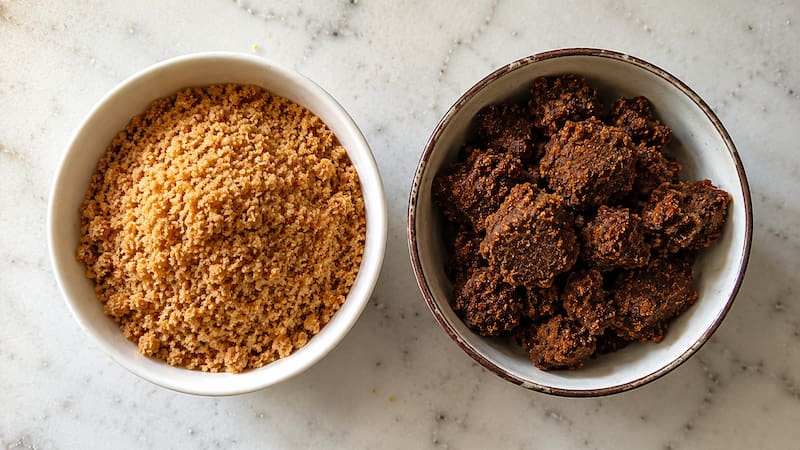
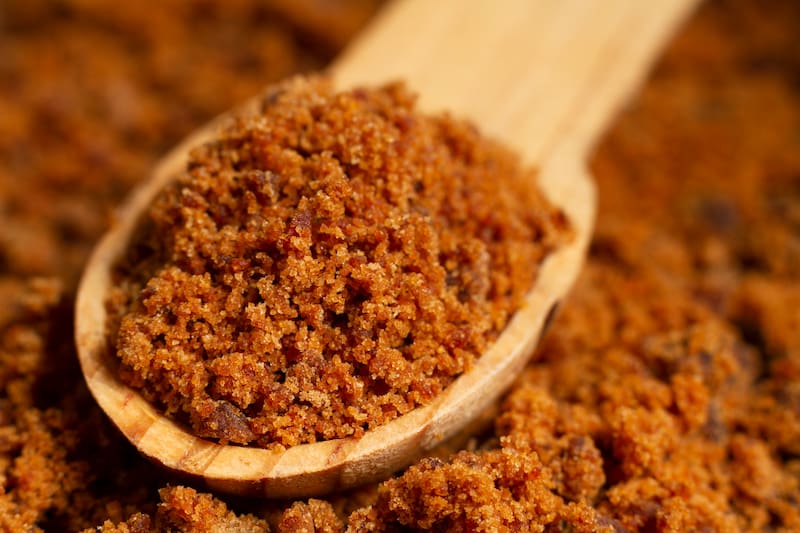
Mascabo sugar is the least processed variety: it is obtained directly from the squeezed cane juice, which is then dried and ground without refining. That is why it retains all its natural molasses and has a more intense flavor, with caramel notes.
Brown sugar, on the other hand, goes through a process closer to that of white sugar. It is made up of 95% sucrose, compared with 99% in white sugar, and retains only a portion of added molasses.
These are the three most common varieties and their main characteristics:
- Mascabo: unrefined, retains natural molasses, provides trace amounts of minerals and vitamins.
- Brown: partially refined, retains some molasses, milder flavor.
- White: fully refined, no molasses, neutral flavor.
Which is better for the body and which makes you gain less weight?
In caloric terms, the three varieties are practically equivalent, since all are made mostly of sucrose. None of them “makes you gain less weight” in any significant way compared with the others.

The real difference is in the additional nutritional value: mascabo sugar provides small amounts of minerals thanks to the molasses it retains, something that brown sugar and white sugar practically do not offer. Even so, nutrition experts recommend moderating the consumption of any type of sugar, regardless of its color or texture.