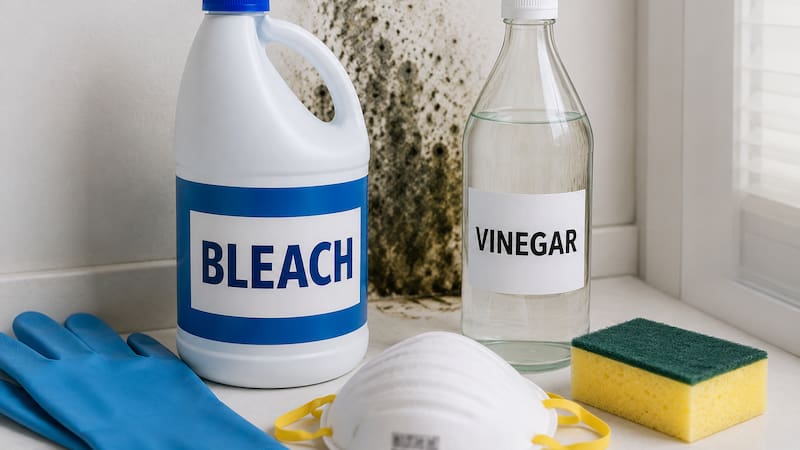

En esta noticia
Mold is one of the most common household problems, especially in bathrooms, kitchens, basements, and other damp areas. When it appears, many people reach for either bleach or vinegar, but experts say the two products do not work the same way.
While bleach has long been considered the go-to cleaner for mold, health and environmental agencies warn that it is not always the best choice. Knowing when to use bleach and when vinegar is the better option can help remove mold more effectively while reducing health risks.
What Is the Difference?
Bleach is a powerful disinfectant that can kill mold growing on hard, nonporous surfaces such as ceramic tile, sinks, and bathtubs. However, experts explain that it often cannot penetrate porous materials like drywall, wood, or grout, where mold roots may continue growing even after the surface appears clean.
White distilled vinegar, on the other hand, is a mild acid that can penetrate porous surfaces more effectively. According to the Environmental Protection Agency (EPA), vinegar can help kill many common types of household mold, making it a useful option for small areas of mold growth.
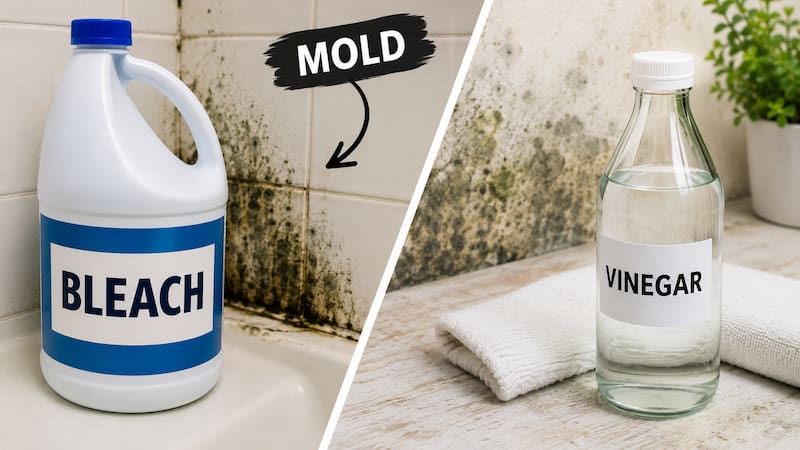
Another important difference is safety. Bleach releases strong fumes and should never be mixed with vinegar or ammonia because doing so can produce toxic gases that are dangerous to inhale.
Which Product Do Experts Recommend?
For most small household mold problems, experts generally recommend white distilled vinegar over bleach.
The EPA advises that mold should first be cleaned by removing moisture and scrubbing affected surfaces rather than relying only on disinfectants. Meanwhile, the Centers for Disease Control and Prevention (CDC) notes that the key to preventing mold is controlling humidity and fixing water leaks as quickly as possible.
Vinegar is often preferred because it can reach deeper into porous materials and is less likely to leave surviving mold beneath the surface. Bleach remains useful for disinfecting certain hard, nonporous surfaces after mold has been removed, but it is not considered the best solution for every situation.
When Should You Use Bleach Instead?
Bleach can still be appropriate in certain situations, including:
- Cleaning mold from sealed tile, glass, or bathtubs.
- Disinfecting nonporous surfaces after mold removal.
- Removing stains left behind after mold has been cleaned.
Experts recommend wearing gloves, eye protection, and ensuring good ventilation whenever using bleach.
How to Remove Mold Safely at Home
If the affected area is small, experts recommend these steps:
- Fix the source of moisture before cleaning.
- Wear gloves, goggles, and an N95 mask if possible.
- Apply white distilled vinegar directly to the mold and let it sit for about one hour.
- Scrub the surface with a brush.
- Dry the area completely to prevent mold from returning.
If mold covers more than about 10 square feet, or if it resulted from sewage or floodwater, the EPA recommends contacting a professional mold remediation service instead.