
En esta noticia
If structures rarely preserved over time were found in a fossil , what could the specialists who study it learn about the life of the dinosaurs from 66 million years ago?
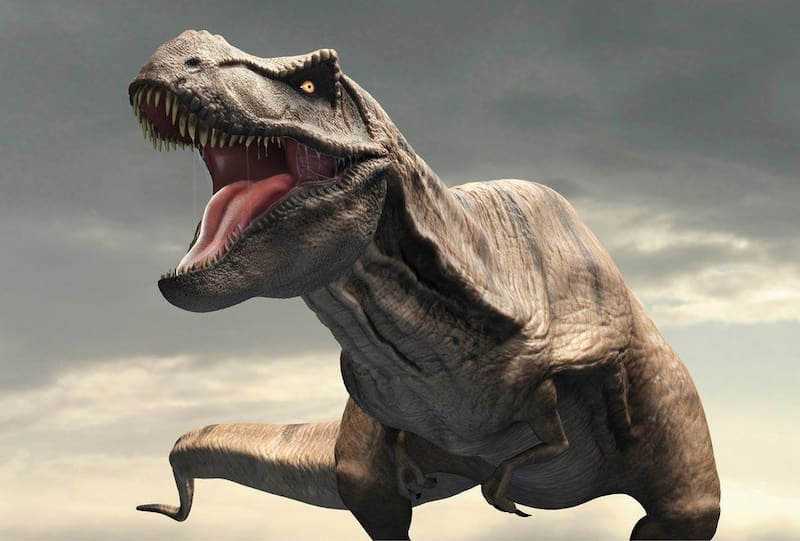
Experts from the University of Regina were able to answer that exact question by closely examining a fractured rib from the skeleton of Tyrannosaurus rex, known as “Scotty” in the scientific community, which preserved soft tissue structures.
“Scotty’s rib contains a vast network of mineralized blood vessels that had never before been observed in a fossil”, says Mauricio Barbi, professor of physics at the University of Regina.
How they used this T. Rex fossil to “travel through time”
Neutron imaging is a noninvasive alternative for revealing the internal structures of objects that cannot be analyzed with X-rays, such as organic and light materials.
Using this technique at the Oak Ride National Laboratory (ORNL) , the experts created 3D representations to observe the inside of the fossilized bone. They highlight the precise detail provided by this tool to observe sensitive structures without damaging the samples.
This made it possible to observe a type of remains that are almost never preserved and that, because of the decomposition process, cannot be easily studied.
“By putting the clues together, we understand the past and how things might evolve in the future,” says Marcella Berg, assistant professor of physics at the university in charge of the discovery.
What experts know about this strange fossil
The specialists explain that at the moment the fracture occurred, blood flowed to the area and formed blood vessels to heal the wound.
The rib did not fully recover because Scotty died in a salt marsh before the process could finish.
Experts say the place where it died provided the perfect conditions for the structures of the soft tissues, which usually tend to disintegrate, to be preserved.
The technique then made it possible to “bring back to life” a process that occurred inside the dinosaur when it was alive and thus add a new piece of information to the puzzle that science is building about these living beings’ passage through Earth.