
En esta noticia
A new scientific study has found that two of Southern California’s most important fault systems are currently experiencing the highest levels of accumulated tectonic stress recorded in the past 1,000 years.
The findings have renewed interest in earthquake preparedness across the region, although researchers stress that the study does not predict when the next major earthquake will occur.
The research, led by scientists from the University of Hawaiʻi at Mānoa and published in the journal Geology, examined the San Andreas and San Jacinto fault systems using advanced geodynamic models to better understand how stress has built up over centuries.

Study finds record stress levels along the San Andreas and San Jacinto faults
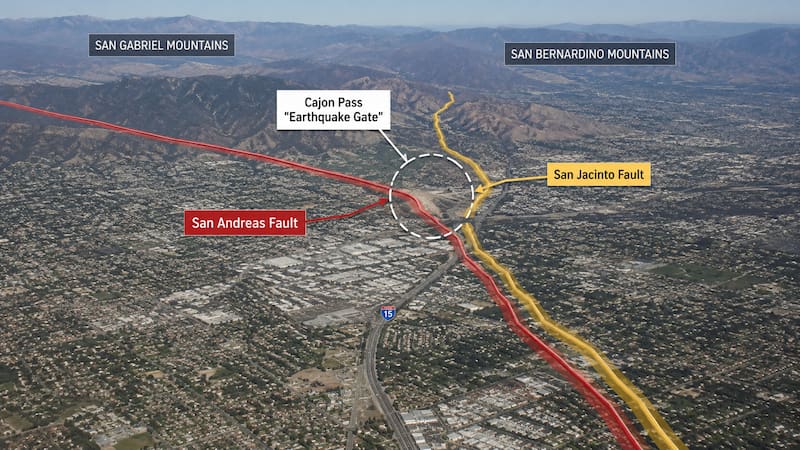
According to the study, both fault systems have reached exceptionally high stress levels due to centuries of tectonic strain. Researchers identified the Cajon Pass area as a critical section where a rupture could potentially transfer from the San Jacinto Fault to the San Andreas Fault, increasing the likelihood of a larger earthquake rupture.
The researchers describe this area as an “earthquake gate” because it may allow seismic energy to propagate between the two fault systems. Their simulations indicate that current conditions are unlike any observed over the past millennium.
Despite these findings, the study emphasizes that elevated stress levels should not be interpreted as evidence that a major earthquake is imminent. Instead, the results improve scientists’ understanding of how earthquakes may develop and help refine long-term seismic hazard assessments.

Scientists say the study is not a prediction of the next California earthquake
The authors caution that no scientific method can currently predict the exact timing of a major earthquake. While the accumulated stress suggests the faults are capable of producing a significant seismic event, it does not indicate that one will happen in the coming days, weeks, or months.
Instead, researchers say the findings can help emergency planners, engineers, and public officials better evaluate earthquake risks and strengthen preparedness efforts in Southern California, one of the most seismically active regions in the United States.