
En esta noticia
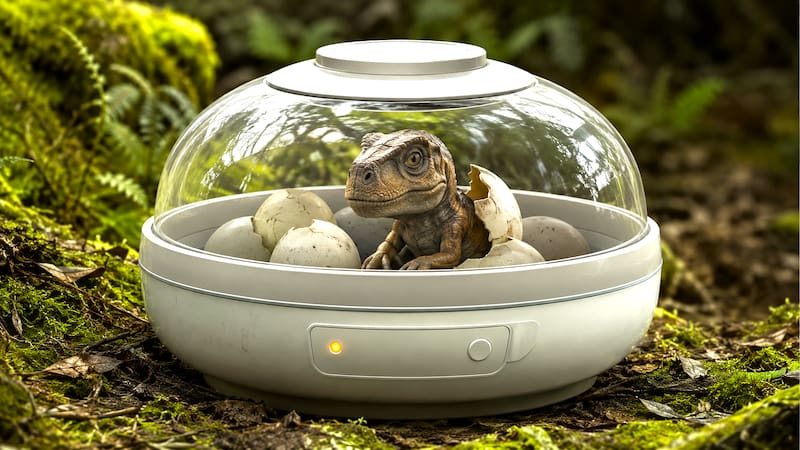
A team of researchers in Taiwan set out to create a full-size dinosaur incubator to answer a question that for decades had been a paleontological mystery: how do oviraptors incubate their eggs?, dinosaur-like animals that lived between 70 and 66 million years ago.
After recreating a specimen, a complete nest, and performing heat-transfer simulations, the experts concluded that these dinosaurs did not incubate their eggs the same way modern birds do, but rather, in addition to the heat from their bodies, they may have used heat from the Sun.
The results were published in the scientific journal Frontiers in Ecology and Evolution.

This is the dinosaur incubator created by scientists
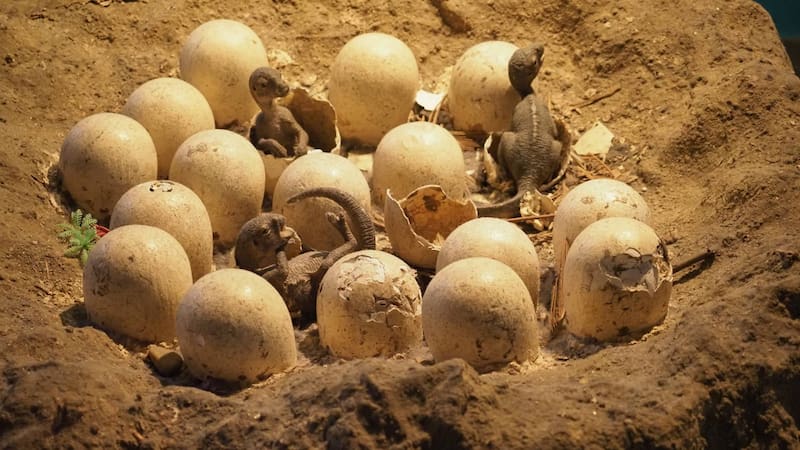
To carry out the study, the scientists reconstructed a specimen of Heyuannia huangi, an oviraptor that lived in what is now Chinese territory.
The structure of its nest was designed at full size using
- A trunk made of polystyrene foam and an internal wooden structure
- Cotton, fabric and bubble wrap to reproduce the soft tissues
- Eggs made of resin to imitate the original eggs as closely as possible
The mystery the scientists sought to solve with this incubator
Until now there were doubts about the incubation method of these dinosaurs and the experts wanted to determine whether they obtained the heat from
- The environment
- Direct contact with the adult
- Or a combination of both sources
What scientists discovered about these dinosaurs
The simulations showed that the incubation pattern changed depending on the ambient temperature and the adult’s position over the nest.
In cold conditions, when the adult remained over the eggs, those on the outer ring recorded temperature differences of up to 6 C, a variation that could cause the eggs to hatch at different times.
By contrast, under warm conditions, that difference fell to just 0.6 C, suggesting that solar heat helped maintain the temperature.

In addition, modern birds use a system known as thermoregulated contact incubation, through which the adult transmits heat directly to the eggs in the nest. However, oviraptors did not meet the necessary conditions to imitate this method.
“It is unlikely that large dinosaurs perched on their nests. They probably used the heat of the sun or the ground to incubate their eggs, like turtles. Since oviraptor clutches are open to the air, the heat of the sun probably mattered much more than the heat of the ground," the researchers explained.
Thus, the study offers new clues about how these surprising animals cared for their nests millions and millions of years ago.