
En esta noticia
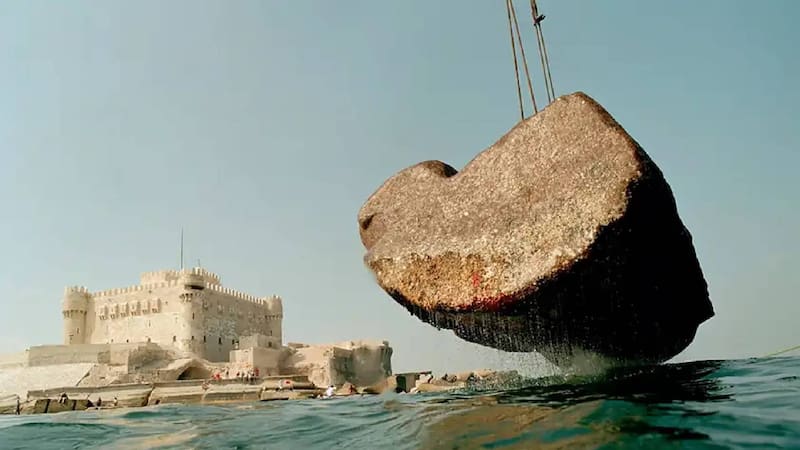
In the depths of the Mediterranean Sea, a team of distinguished archaeologists made a discovery of great historical value. It consists of 22 blocks of monumental dimensions that were part of the legendary Lighthouse of Alexandria, a structure that remained submerged for centuries in the waters of this ancient port in eastern Egypt.
The discovery is part of the international PHAROS project, an initiative developed jointly by France’s Centre National de la Recherche Scientifique (CNRS), under the direction of archaeologist Isabelle Hairy, Egypt’s Ministry of Tourism and Antiquities, and the Dassault Systèmes Foundation.
The objective of this operation is to scan the recovered pieces to advance in the digital reconstruction of the ancient monument, considered one of the seven wonders of the ancient world.

Underwater discovery of the remains of the Lighthouse of Alexandria, recognized as one of the Seven Wonders of the Ancient World.
Among the extracted elements are lintels, jambs, thresholds, and paving slabs, each weighing between 70,000 and 80,000 kilos. These pieces formed part of the monumental entrance to the Lighthouse, whose architecture merged Egyptian and Greek techniques.
Although the sunken ruins have been visible since 1968, systematic archaeological work has been carried out for more than 20 years. In 1994, French archaeologist Jean-Yves Empereur led a large-scale exploration, during which more than 3,300 objects were documented, including sphinxes, obelisks, columns, and granite blocks.
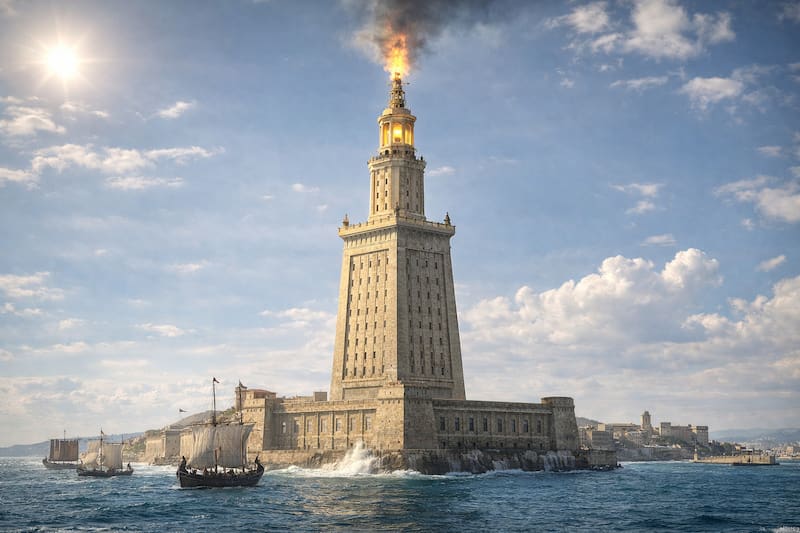
The blocks were recovered after 3 decades of underwater research, begun by Yves Empereur, who identified the first traces of the submerged lighthouse. Currently, thanks to new technology, the team has managed to recover the most imposing pieces.
How the restoration of the Lighthouse of Alexandria is carried out
More than 100 of these architectural fragments have been digitally scanned on the seabed over the past decade.
To complement the digital reconstruction, a team of experts - including historians, archaeologists, numismatists, and architects - is carrying out a compilation that includes descriptions and ancient depictions of the tower.
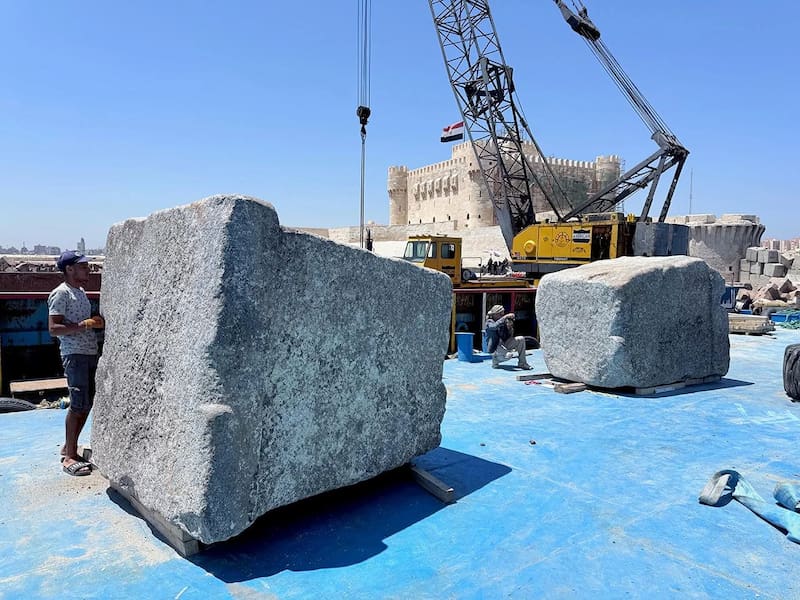
Each of these blocks, weighing up to 80 tons, will be scanned using detailed photogrammetry. Specialists from the Dassault Systèmes Foundation will digitally analyze and virtually reposition the blocks as if they were pieces of a vast archaeological puzzle.
What the Lighthouse of Alexandria was like
The Lighthouse of Alexandria was erected in the early 3rd century BC, under the rule of Ptolemy I Soter. Its design was created by the Greek architect Sostratus of Cnidus, and it stood more than 100 meters tall on the island of Pharos, serving as a safe guide for ships in the dangerous coastal waters of Alexandria.
This monument held the distinction of being the tallest human-made structure in the world for more than 1,600 years, until an earthquake in 1303 rendered it unusable. The remains of the building were reused by Sultan Al-Ashraf Sayf al-Din Qa’it Bay to build a fortress on the same site in 1477.