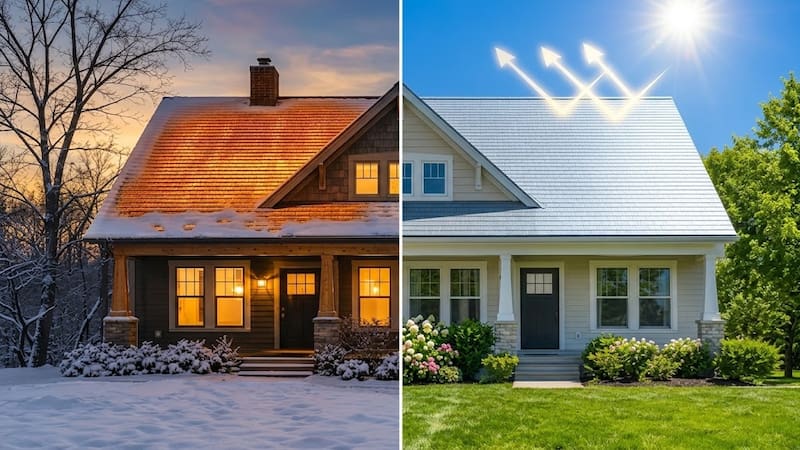

Researchers at Lawrence Berkeley National Laboratory developed a temperature-adaptive radiative coating known as TARC, designed to respond to changes in temperature. The material uses vanadium dioxide, which can change its thermal properties and help regulate how much heat a roof releases.
Researchers evaluated the coating through simulations across 15 U.S. climate zones. It outperformed existing roof coatings in 12 of those zones and showed the potential to reduce annual household electricity consumption by up to 10%.

How does the smart roof coating work?
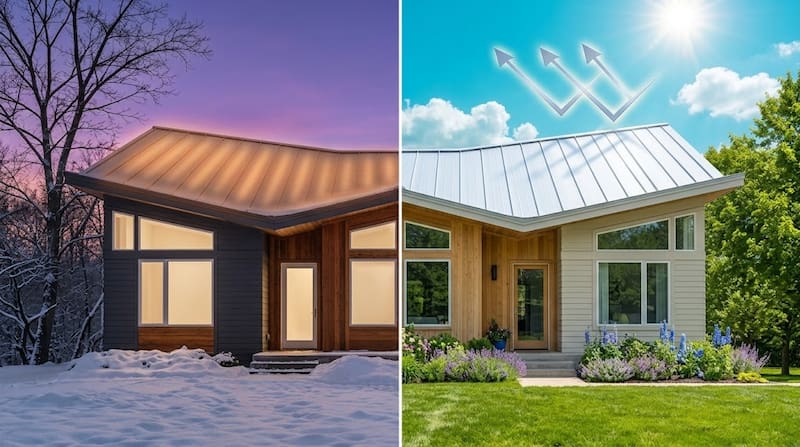
The coating is designed to behave differently depending on the temperature. At lower temperatures, it retains more heat, while at higher temperatures it releases more heat, helping keep homes cooler and potentially reducing the need for air conditioning.
The key material, vanadium dioxide, undergoes a change in its thermal properties at around 67°C (153°F). Researchers developed the coating to take advantage of this behavior and create a roof surface that can adapt to changing conditions.
Could the coating reduce household energy use?
According to the Berkeley Lab simulations, TARC could provide energy savings in different climates because it can help with both heating and cooling. The researchers found that it performed better than conventional roof coatings in most of the 15 climate zones analyzed.
The technology is still under development and is not yet commercially available for residential roofs. Researchers are continuing to study how the coating could be developed and scaled for practical use.