

En esta noticia
Nearly two years passed. In November 2024, three U.S.-flagged vessels were unable to dock in Algeciras. They were carrying military cargo bound for Israel. Now, Washington has billed Spain for it.
The U.S. Federal Maritime Commission (FMC) proposed charging $200,000, about 180,000 euros, for each voyage by a Spain-flagged vessel entering a U.S. port. It also proposed restricting imports of several categories of Spanish products.
This is not yet a sanction. It is a proposal. The FMC opened a public comment period and announced it would offer the Spanish government a hearing before making a final decision. There is no date for that ruling. And nothing guarantees the measures will take effect as announced.

Three ships, one investigation
The conflict has a name and a date. According to the FMC report, cited by El Español, Spain blocked three vessels from docking at APM terminals in Algeciras: the Maersk Denver and the Maersk Nysted on Nov. 9, 2024, and the Maersk Seletar five days later. All three were sailing under the U.S. flag and were operated and supplied by Maersk Line Limited.
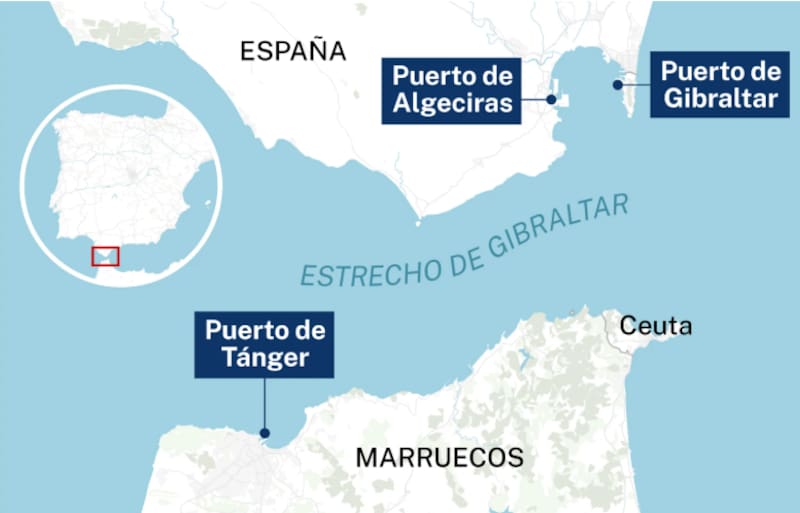
It should be noted that the port of Algeciras, in the province of Cadiz, is for the U.S. a key strategic shipping route for its foreign trade and exports.
These were not ordinary ships. They were carrying cargo under the U.S. Maritime Administration’s Maritime Security Program (MARAD), which ensures the availability of merchant ships for commercial and, above all, strategic needs. In other words, defense materiel.
In December 2024, the FMC opened an investigation. It wanted to determine whether Spain was creating unfavorable conditions for maritime transport tied to U.S. foreign trade.
Meanwhile, Spain’s stance hardened. In September 2025, the government of Pedro Sanchez banned ships from docking at Spanish ports (and from entering Spanish airspace) for vessels and aircraft carrying weapons or military fuel bound for Israel, according to Reuters.
The FMC’s conclusion has now arrived. The agency says it found “conclusive evidence” that Spain denied access to its ports to U.S. vessels. And it argues that those decisions “have serious consequences for the efficiency and reliability of the international maritime transport supply chain.”
It adds that they also affect its ability to “support a U.S.-flagged liner fleet capable of meeting national security needs.” Here is the issue: for Washington, this is not just a commercial matter.
The price of each voyage
The proposal has two parts. The first is the fee. “A fee of $200,000 applies each time a Spanish vessel enters any port in the United States from any foreign port or place,” the report says, according to El Español.
It applies to all ships flying the Spanish flag, regardless of what they carry. The FMC did not specify how many vessels or how many annual voyages would be covered.

And it could have been worse. According to the same outlet, the rule allowed penalties of up to $2.3 million per voyage. In other words, Washington chose the lower end of the range. At least for now.
From oil to ceramics
The second part targets products. The categories named by the FMC are perfumes and cosmetics; oils and fats; ceramics; stone products; and sugar and confectionery products.
The list is broad. The details, however, are thin. The agency did not say which tariff headings would be affected or what mechanism it would use: quotas, bans, additional requirements or another type of measure. It also did not mention specific products or companies.
But one category is raising alarms in Spain: “oils and fats.” In other words, olive oil could be in the crosshairs. So could sectors with a strong export presence, such as ceramics, cosmetics and natural stone.
The scale of what is at stake is considerable. In 2025, Spanish companies exported goods worth 16.716 billion euros to the United States, according to Economy Ministry data cited by El Español.
A path that sidesteps Brussels
Donald Trump repeatedly threatened Spain with sanctions and tariffs. Because it refused to raise defense spending to 5% of GDP. And because of its position on Israel.
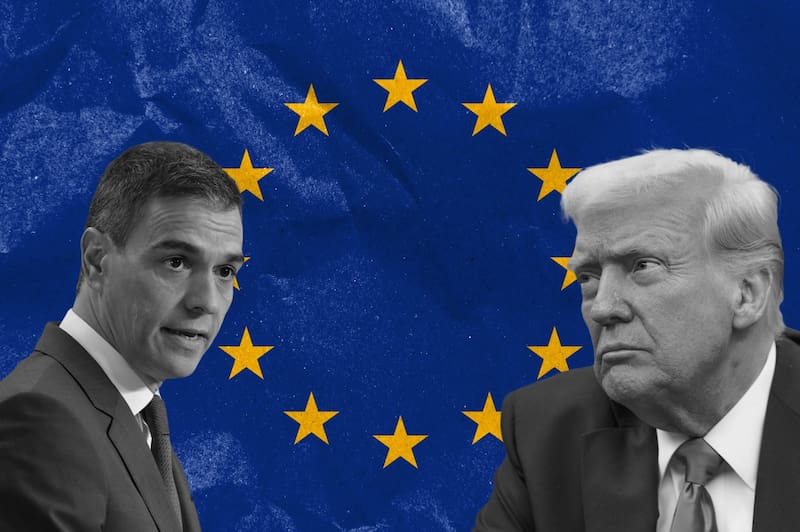
Until now, however, he ran into one limit: the European Union’s common trade policy. Tariffs on one country in the bloc are, in practice, tariffs on the entire EU. The FMC route is different. It goes through a federal agency, under its own case file, and targets specific measures against a single country. It does not go through the negotiating table with Brussels. That may be the biggest new development. And the one Madrid should worry about most.
The case is now in the public hearing phase. The FMC asked companies, organizations, and individuals for comments on the scope of the two measures. After that, the final decision will be in the hands of the Trump administration.
For now, it is $200,000 on paper. Whether it becomes a real bill (and for how much) will depend on what happens at that hearing. That is where Spain will have a say.