En esta noticia
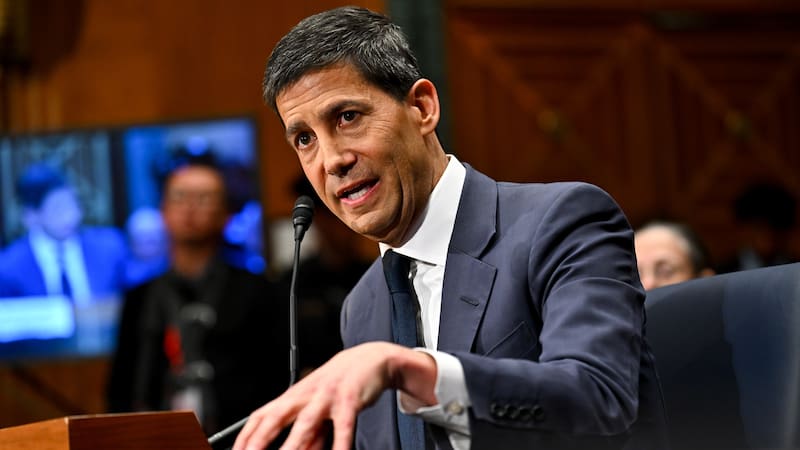
The U.S. Federal Reserve (Fed) begins its two-day monetary policy meeting this Tuesday, the first led by Kevin Warsh as the institution’s new chairman, and one that presents him with a complicated scenario due to the significant rise in inflation, a resilient labor market, and pressure from President Donald Trump to lower interest rates.
Warsh, nominated by Trump after more than a year of harsh criticism leveled at his predecessor, Jerome Powell, was chosen by the president for his views on the need for greater monetary easing.
The Fed begins the Warsh era with inflation at 4.2%: What is the government’s response to this event?
Although Trump has said he supports an independent Fed, he has also firmly stated that the price of money should be below the current level, between 3.75% and 3.5%, to stimulate investment and growth.

And so Warsh faces his first meeting of the Federal Open Market Committee (FOMC) under conflicting pressures, as year-over-year inflation stood at 4.2% in May, well above the 2% target, because the rise in fuel prices, stemming from the war against Iran, is seeping into the rest of goods and services.
The impact of the East conflict on U.S. inflation
Despite the memorandum of understanding that the U.S. and Iran say they will sign on Friday to end the war, experts warn that restoring a normalized supply of hydrocarbons in the Strait of Hormuz will take time to materialize and to be reflected in prices, so the current upward trend seems likely to persist for some time.
Ostrum’s chief economist, Philipe Waechter, believes that current inflation has negative effects even when expectations about prices, which have not broadly moved despite Trump’s insistence that a Washington-Tehran deal was possible, remain anchored.
“Sustained price increases generate uncertainty and erode confidence in institutions. Therefore, the central bank should not take the risk of remaining inactive, especially if the inflation shock is perceived as persistent,” says Waechter, who is calling on the Fed to “act quickly and decisively” and raise rates to control prices.
“A gradualist approach, based on small steps, is not the most effective,” he adds.
The Fed’s request and what is expected in the coming months
Conversely, AllianceBernstein’s chief U.S. economist, Eric Winograd, expects the Fed to take a wait-and-see stance after this meeting.
“Unless oil prices fall sharply -and soon-, we expect headline inflation to continue rising”, says Winograd.
The benchmark crude barrel in the U.S., Brent, has fallen three dollars since the U.S.-Iran agreement was announced on Sunday, leaving it around $77, still 20% more expensive than before the war began on February 28.
“With inflation eroding the purchasing power of income, many households may feel the need to cut spending in the coming months”, notes the AllianceBernstein economist.
Winograd points out that, although he does not expect the pullback in household spending to cause a recession, “the consumer remains by far the biggest driver of the U.S. economy, accounting for around 70% of total activity. If the consumer weakens, the economy as a whole will weaken too.”
Added to that pressure on prices are last month’s employment data, with 149,000 new jobs created and 66,000 fewer unemployed people, reflecting a market that is cooling, but not enough to bet on monetary stimulus.
Many analysts believe that -in addition to more contained inflation- a greater slowdown is needed to justify a cut in the benchmark rate, and have stressed that the latest reports from the Bureau of Labor Statistics (BLS) have already pushed market expectations for the first rate cut of the Warsh era further out.
Source: EFE