
En esta noticia
Keeping cash stored at home can raise doubts about the best way to protect bills and keep them in good condition.
Over time, factors such as humidity, dust, heat, and contact with certain materials can damage the paper, especially when cash is stored for long periods.
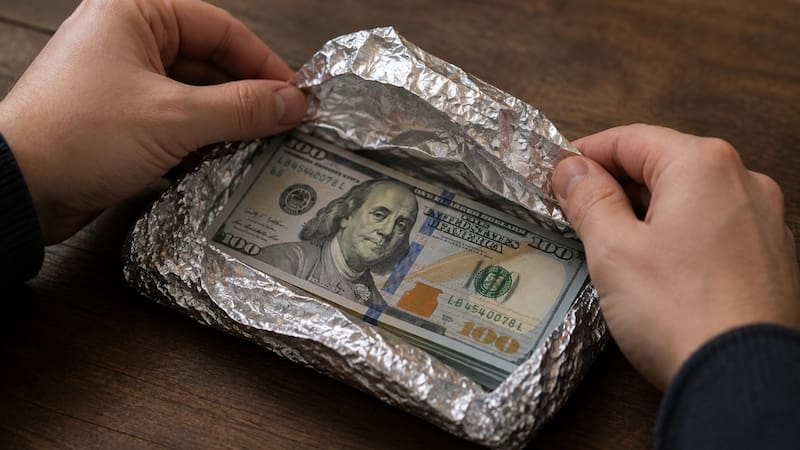
Some people choose to use home remedies, such as wrapping bills in aluminum foil before storing them in a container or space intended for their preservation.
How to preserve bills at home and what role aluminum plays
When deciding to keep cash for several months or even years, the conditions of the chosen place are essential. Humidity, heat, dust, and prolonged exposure to light can affect the condition of bills over time.
In this context, aluminum foil can be used as a complementary layer of protection, since it acts as a physical barrier against light and limits direct contact with the environment.
What wrapping bills in aluminum foil is for: the benefits
One of the reasons some people turn to this method is that aluminum can help reduce the money’s exposure to dust and to certain contaminants present in the environment.
It can also act as a barrier against light. In this way, aluminum foil can provide an additional layer of protection when cash is stored for an extended period.
Its function is to partially isolate the bills from the surroundings, so it should not be considered a sufficient preservation method on its own.
Does aluminum prevent bills from getting damp?
Although this method is often associated with protection against humidity, it is important to keep in mind that aluminum foil does not make money waterproof or eliminate moisture from the environment.
If bills are stored while still damp, or remain in a place where condensation exists, covering them with aluminum can make it harder for that moisture to escape and can encourage deterioration.
Before wrapping them, it is necessary to check that they are completely dry. It is also recommended to avoid spaces with leaks, sudden changes in temperature, or high humidity levels.
For long-term storage, a suitable container for preserving documents, placed in a dry and cool environment, may be a more appropriate alternative than using only a layer of aluminum.
Step by step: how to wrap the bills
If you want to use aluminum as extra protection against light and dust, you can follow a simple procedure:
1. Check the condition of the money. Before wrapping it, the bills should be clean and completely dry.
2. Arrange them properly. It is advisable to keep them together and avoid folding them excessively.
3. Prepare the aluminum foil. The sheet should be clean, in good condition, and large enough to cover all the money.
4. Cover the bills. The bundle should be wrapped, but without putting excessive pressure on the cash.
5. Choose an appropriate place. Once wrapped, the money should be kept in a cool, dry space. Aluminum should be understood as an additional layer of protection, not as the only preservation method.
The place where the money is stored matters more than the aluminum
One of the main mistakes is thinking that wrapping bills is enough to keep them protected regardless of the conditions of the place where they are stored.
If the environment has high humidity or high temperatures, the cash can deteriorate even if it remains covered.
For that reason, the surroundings remain a key factor in its preservation.