
En esta noticia
The increase in geopolitical and trade tensions among various leaders has raised alarms worldwide over the possibility of a Third World War. In this context, the United States has managed to establish a strategic position in Asia, which is causing concern in China.
The United States has made its intention clear to consolidate its power in the Pacific, showing that its military presence can reach highly sensitive areas, near crucial trade routes and the territory that Beijing considers untouchable. The question now is whether this is merely a deterrent gesture or the beginning of an open confrontation.

Will World War III begin?: The United States sustains a coalition with this nation and unsettles China
As part of the exercises, the United States deployed the medium-range Typhon missiles and the short-range NMESIS. Through these military capabilities, Washington signals its ability to operate in strategically important areas of the Pacific, ranging from key sea lanes to areas adjacent to Taiwan.
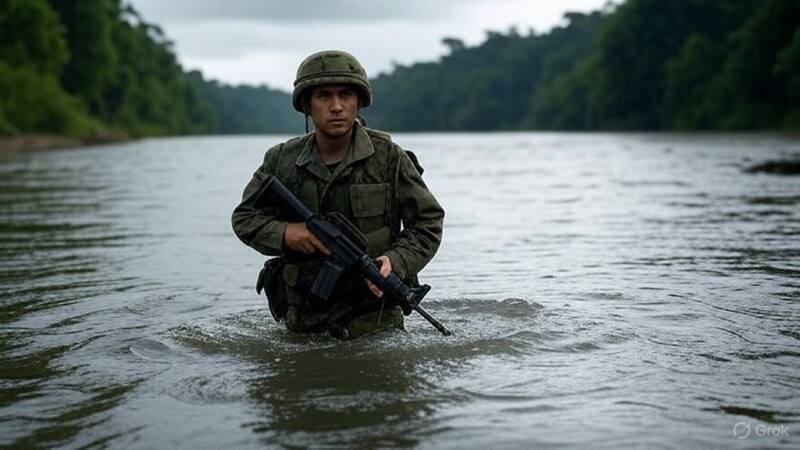
The positioning of the United States in Asia is based on a security strategy that aims to anticipate and foresee possible military moves by China.
Japan, on the other hand, has deployed Type-12 surface-to-surface missiles, which have been designed to safeguard its southwestern islands and ensure the defense of the archipelago against any contingency. This cooperation strengthens the bilateral alliance and positions Japan as a central actor in regional defense alongside its historic partner, the United States.
China reacted to the military actions of the United States and Japan.
China has reacted decisively, considering that the introduction of these missile systems constitutes "a significant threat" to its strategic security. For Beijing, the exercises carried out by the United States and Japan represent a direct provocation, especially because of their proximity to Taiwan, territory that the Asian giant claims as its own.