En esta noticia
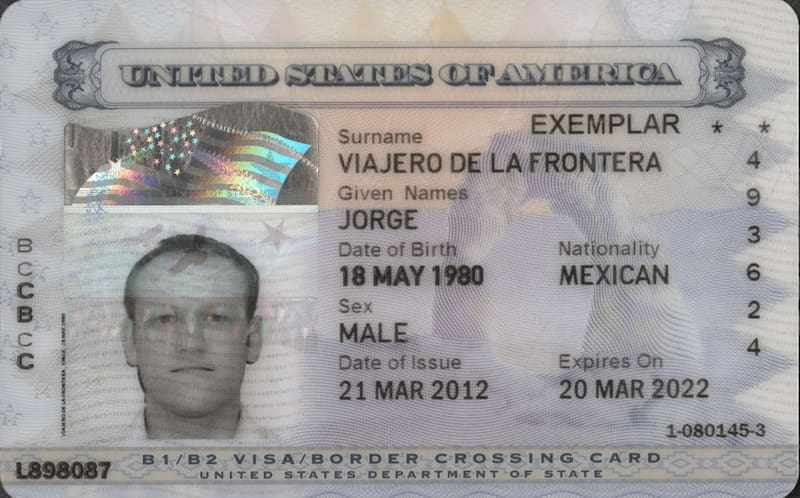
The United States allows Mexican citizens without a traditional passport or visa to enter separately through the Border Crossing Card (BCC). The document combines both functions in a single card and allows stays of up to six months.
The State Department confirmed that this credential is the size of a credit card. It is valid for ten years and is based on Section 104 of the 1996 IIRIRA law.
The process is carried out exclusively at U.S. consulates in Mexico. It requires meeting the same standards as a conventional B1/B2 visa.
What exactly is the Border Crossing Card?
The BCC is equivalent to Form DSP-150 and works as a B1/B2 visa embedded in a laminated card with security technology. It allows multiple crossings without renewing paperwork for each trip.
The card shows its expiration date on the front. Except for exceptions for minors, it remains fully valid for a full decade.
Those who have it can enter by land at authorized border checkpoints. This avoids having to process a passport and visa separately.
To obtain it, the applicant must meet these requirements:
- Be a citizen and resident of Mexico.
- Meet the eligibility standards for B1/B2 visas.
- Demonstrate ties to Mexico that guarantee return.
- Present a valid Mexican passport at the time of application.
Who can apply for it, and how much does it cost?
Access is limited to Mexican citizens residing in Mexico. In addition, they must qualify under the standard criteria for visitor visas.
The application is handled at U.S. consular sections in Mexico. Each embassy or consulate publishes the official procedure to follow.
The cost varies according to the current fees of the State Department. There is an exception for children under 15 with a reduced fee.
That reduced fee applies if at least one parent has or is applying for a BCC. In that case, the child’s card expires when they turn 15, not after the standard ten-year validity.