
En esta noticia
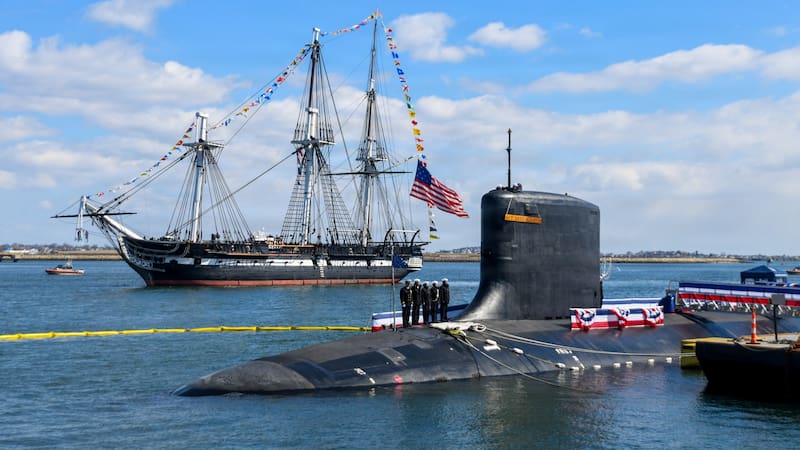
The United States will devote $76.6 billion to building 14 nuclear-powered submarines to strengthen its maritime military capabilities: nine attack boats from the Virginia class, in their Block VI version, and five ballistic missile submarines from the Columbia class, in the second phase of construction.

The contract, awarded July 29, 2026, by the Department of War, also includes investments to improve shipyard productivity and strengthen the industrial capacity the Navy needs to deliver these vessels.
The deal involves General Dynamics Electric Boat and HII-Newport News Shipbuilding, two key companies in the construction of U.S. military submarines.
Which submarines will the United States build?
The contract is split into three line items covering different U.S. Navy needs. Although all 14 vessels will be nuclear-powered, they will not serve the same mission or be equipped with the same weapons systems.
According to details released by USNI News, the funding is distributed as follows:
- $42.1 billion: nine Virginia Block VI attack submarines and materials for a 10th unit. These models are designed for attack operations and multidomain missions.
- $29.5 billion: five Columbia Build II ballistic missile submarines. They will carry nuclear ballistic missiles as part of the United States’ strategic deterrent capability.
- $5 billion: initiatives to improve productivity and capacity at General Dynamics Electric Boat and HII shipyards.
The Department of War described the deal as a strategic investment to modernize the U.S. submarine force. In the announcement, the department said the contracts represent a historic investment in the country’s modernization and maritime supremacy.
“This historic investment underscores the Department’s continued commitment to undersea superiority and the recapitalization of our nuclear triad,” said Rear Adm. Robert Gaucher, director of submarine programs.
Will the new submarines be able to launch Tomahawk and hypersonic missiles?
Yes. The Virginia Block VI submarines will include a Virginia Payload Module configuration designed to carry long-range strike weapons. Planned capabilities include Tomahawk cruise missiles and the Navy’s future long-range hypersonic missile.
Tomahawk missiles can strike land targets from long distances. Fired from submarines, they give U.S. forces a platform that can move closer to an operational area without being as exposed as a surface ship.
The Virginia design prioritizes stealth, strike capability and the ability to operate in different military scenarios. Because they are nuclear-powered submarines, they can remain submerged for extended periods, with their operational endurance limited by supplies, crew, and the needs of each mission.
The Columbia submarines, meanwhile, bolster the sea-based component of the U.S. nuclear triad, which also includes land- and air-based nuclear forces. Their ability to carry ballistic missiles is meant to ensure the country maintains a deterrent force that can operate even in the event of an attack on other military installations.
How many submarines will the United States have
According to the Department of War, the country has 26 operational Virginia submarines and 23 more under construction. With the new contract, the Navy will expand its commitments to add additional units of this class, designed for attack, reconnaissance and maritime operations.
As for Columbia, the Navy now has seven submarines of this class under contract. The program calls for a planned fleet of 12 boats, meant to gradually replace the Ohio-class strategic submarines that carry out nuclear deterrence missions.
The Navy’s budget estimates put the total cost of the 12 Columbia submarines at about $128 billion.