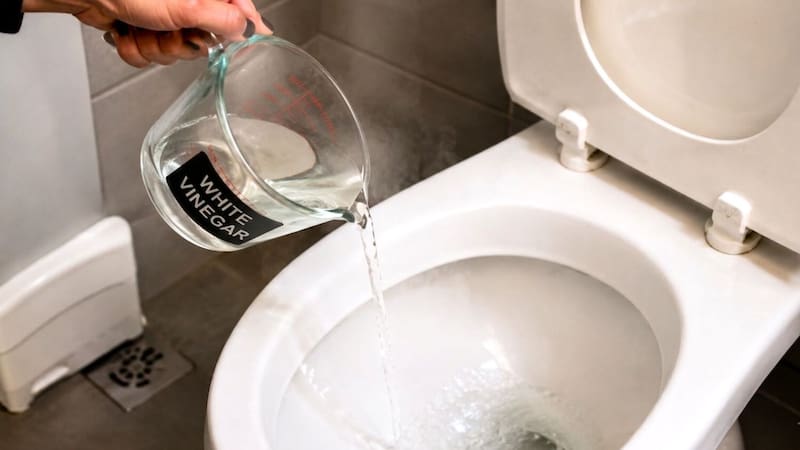

En esta noticia
White vinegar is one of the household products most used for bathroom cleaning because of its ability to help loosen limescale, stains, and mineral residue. When applied warm, it can make cleaning the inner walls easier and reduce persistent odors.
This trick is inexpensive and simple, but it must be done with precautions to avoid damaging the porcelain or causing dangerous reactions with other products.

Pouring hot white vinegar into the toilet: What is it for?
Hot white vinegar can be used to loosen limescale deposits and mineral residue and surface stains accumulated inside the toilet. Its acidity helps dissolve part of the built-up residue, while the temperature enhances its action on adhered dirt.
This trick also helps reduce odors and make scrubbing easier afterward. However, it does not replace a specific disinfectant: vinegar is mainly useful for removing buildup, but it does not guarantee the elimination of microorganisms.
How do you prepare white vinegar to pour into the toilet?
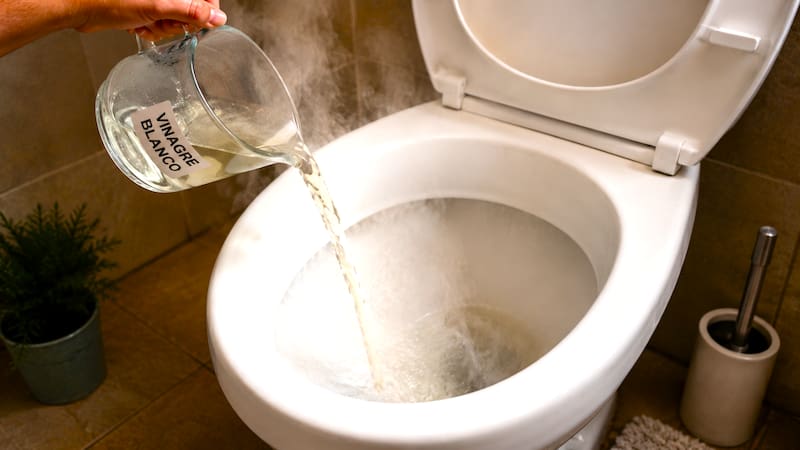
First, heat between one and two cups of white vinegar in a pot or suitable container. It should be warm to moderately hot, but never come to a boil, since a sudden change in temperature can affect the toilet material.
Then, pour it slowly over the inner walls of the toilet, making sure to cover areas with limescale or stains. Let it sit for between 30 minutes and one hour, and in extreme cases, overnight.
Finally, scrub with the toilet brush and flush. This can be done once a week or occasionally.

Why do they recommend pouring white vinegar into the toilet?
White vinegar is often recommended because it is inexpensive, easy to find, and useful for treating mineral residue without resorting to very abrasive cleaners. Its acetic acid content helps soften limescale and marks caused by water.
It allows for routine cleaning with few ingredients and without leaving overly strong scents. Even so, it must be used correctly and never combined with bleach, since the mixture can release toxic gases.