En esta noticia
Caring for plants, whether indoors or outdoors, represents a major expense of time and energy, because it is not only about watering them and keeping the soil healthy; you must also take their sunlight hours into account and look for a way to optimize their absorption.
Among the different home care tricks circulating online, the method of placing aluminum foil around plants is one of the best and most effective.

What is placing aluminum foil around plants used for?
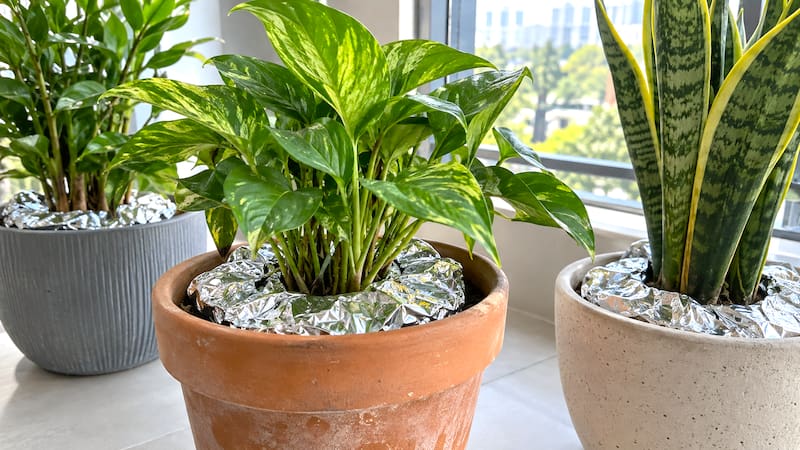
Aluminum foil can be used as a partial covering over the substrate or on the edge of the pot. Its function is to reduce water evaporation so the soil retains moisture for longer.
In addition, it also helps reflect light toward the leaves, a benefit that can be used with plants placed near a window or in spaces with limited lighting.
Additionally, it can act as a physical barrier that makes it harder for ants and other pests that move through the pot to pass through.
It does not replace pest control if there is an infestation.
How should aluminum foil be placed around plants correctly?
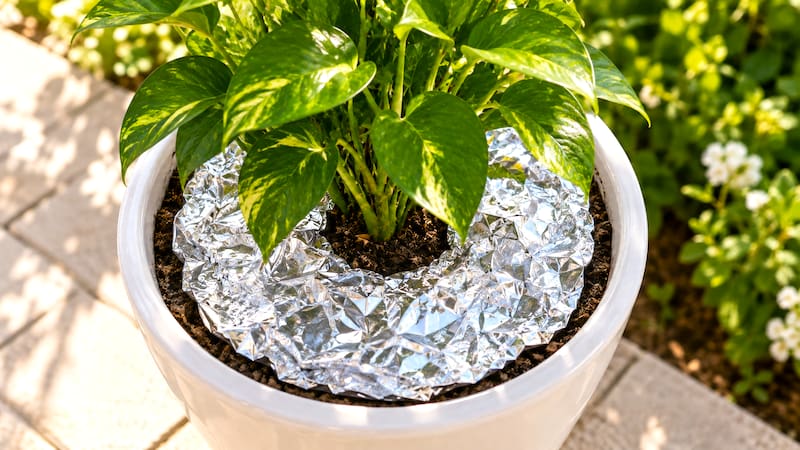
To use this method correctly, the aluminum foil should be cut into strips and placed around the inner edge of the pot or on part of the soil. It should not come into contact with the stems or leaves, nor cover the substrate completely.
The ideal is to leave certain areas of soil uncovered so air can circulate and so moisture can be monitored when watering.
Why do they recommend placing aluminum foil around plants?
This method is recommended for being homemade and inexpensive. In addition, it helps care for plants with very important factors such as moisture, available light, and protection from direct heat. It is especially useful with potted plants that dry out very quickly or receive intense sun.