
En esta noticia
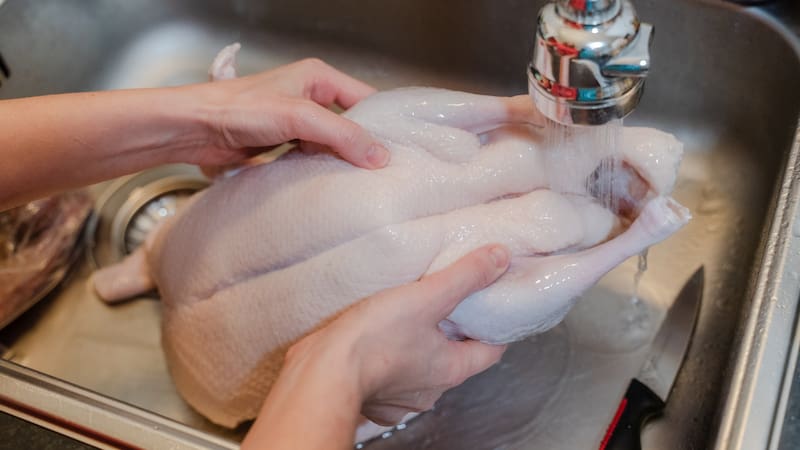
Washing chicken as part of the pre-consumption preparation may seem like a good idea to preserve hygiene, but health experts agree that in reality this practice is more risky than beneficial.
Knowing how to handle this product safely is essential, given that in the United States chicken is the most chosen type of meat, according to data shared by the Economic Research Service.
Raw chicken: why it is important to prevent risks
Specialists explain that raw chicken can contain pathogens such as Campylobacter, Salmonella or Clostridium perfrings.
In that context, CDC details in an article published in April 2024 that chicken is one of the main sources of illness and that year after year approximately one million people become ill in the United States from consuming contaminated poultry.
Salmonella is one of the main health concerns in this context, with 1 in every 25 packages of chicken contaminated with this bacterium at the time of publication.
For this reason, cooking the chicken is not the only important thing: illnesses can be transmitted through the surfaces that raw chicken or its juices have come into contact with.
Washing chicken is not recommended: what are the risks of doing it anyway
“Raw chicken is ready to cook, so there is no need to wash it before. According to a USDA study, 1 in 7 people who cleaned the sink after washing chicken still had germs on the surface,” explains the federal agency.
The United States Department of Agriculture also discourages this practice and says it is one of the ways pathogens spread, commonly known as “cross-contamination”.
Although washing chicken goes against expert guidance, CDC explains that those who still want to wash it should do so by running water gently over the meat to reduce any chance of splashing, clean the sink as soon as possible with hot soapy water and then disinfect any item used. Finally, handwashing for at least 20 seconds is essential.
To minimize risks, the University of Connecticut also advises that raw poultry be prepared with utensils different from those used to handle other types of food.
“You may want to reserve a cutting board and label it for use only with raw meat, poultry or fish. Do not let poultry remain at room temperature for more than two hours during preparation,” the institution says.
At what temperature should chicken be cooked for its consumption to be safe?
CDC’s advice is to always use a thermometer to ensure that the chicken is being cooked to a temperature no lower than 74 °C.