
En esta noticia
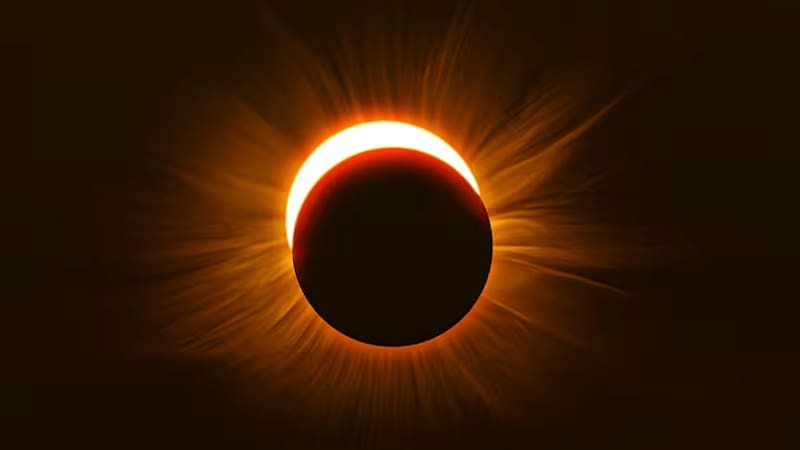
On August 12, 2026, the Moon will completely cover the Sun and turn day into night in several regions of Europe. The National Aeronautics and Space Administration (NASA) confirmed that the total eclipse will cross the Arctic Ocean, Greenland, Iceland, and northern Spain and Portugal. Totality will last up to 2 minutes and 18 seconds at its peak.
It will be the first visible from mainland Europe since August 11, 1999, when the phenomenon crossed France, Germany, Austria, Hungary, and Bulgaria. Some 15 million people live within the path of totality.

Where will the 2026 total solar eclipse be visible?
The path of totality will cross Greenland, Iceland, and the Iberian Peninsula from west to east, passing through A Coruña, León, Bilbao, Zaragoza, and Valencia. Reykjavík will be inside the band. Madrid and Barcelona will be outside it and will only see a partial eclipse.
In the United States, the phenomenon will be visible only as a partial eclipse in several northeastern and Midwestern states.
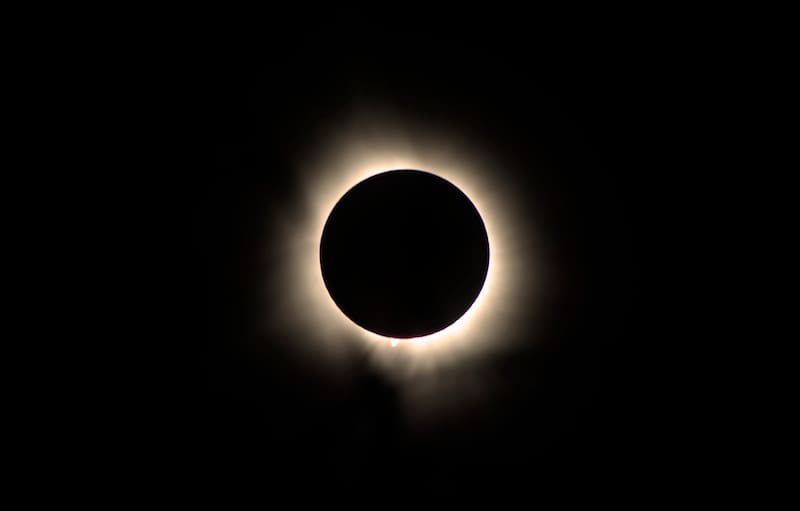
Spanish cities within the path of totality
- A Coruña – 76 seconds (Sun at 12° above the horizon)
- Oviedo – 1 min 48 s (longest duration among capitals)
- Bilbao, Burgos, Santander – central strip
- Zaragoza, Valencia, Palma de Mallorca – final stretch
How does this solar eclipse affect you, and what should you know before seeing it?
The eclipse will occur at sunset, with the Sun very low on the horizon, so it will be crucial to choose clear observation points to the west, with no buildings or mountains obstructing the view. The Spanish Astronomy Network is already coordinating with local municipalities to manage the massive influx of visitors.
It is mandatory to use ISO 12312-2 certified glasses. Homemade filters—CDs, negatives, or sunglasses—do not provide adequate protection. After this eclipse, the next visible total eclipse will be on August 2, 2027. The one after that will not arrive until 2053.